
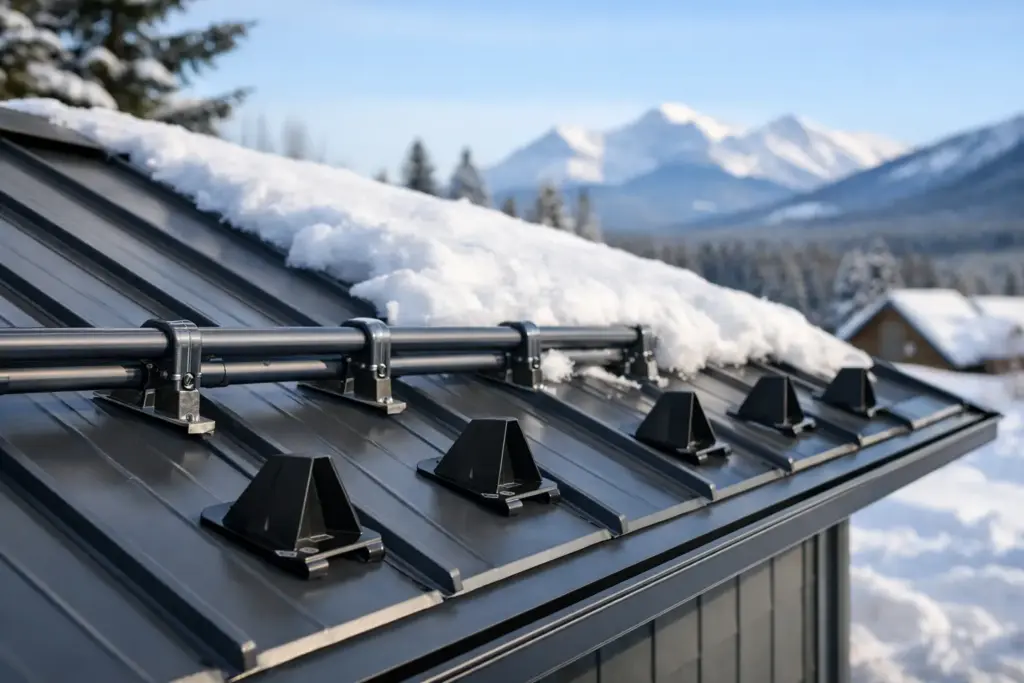
A clean metal roof can shed snow quickly – sometimes too quickly. After a heavy Alberta snowfall followed by sun or a temperature change, a dense sheet of snow and ice can release without warning. Snow retention systems are designed to manage that risk by holding snow in controlled sections until it can melt or release gradually.
For acreage homes, custom builds and premium residential properties, this is not a minor accessory decision. A properly planned retention system protects people below the roofline, preserves landscaping and exterior finishes, and helps maintain the disciplined appearance expected of a high-value home.
Why Metal Roofs Need Snow Management
Metal roofing performs exceptionally well in Alberta’s climate. It resists wind, handles freeze-thaw cycles, sheds moisture efficiently and offers long service life when the roof assembly is correctly designed and installed. Its smooth surface, however, also allows accumulated snow to move more readily than it would on a rougher roofing material.
That movement is most likely when the roof surface warms, even if outdoor temperatures remain below freezing. Sun exposure, heat loss from the building and changing weather can loosen the bond between snow and the metal panel. Once the lower edge releases, the entire mass above it can slide as one load.
The result can be more than an inconvenience. Sliding snow can block a doorway, damage a lower roof, crush shrubs, bend eavestroughs or create a serious hazard over a driveway, deck or pedestrian route. On a steep roof, the force of that release can be substantial.
Snow retention does not stop snow from landing on the roof. It gives the snowpack a controlled point of resistance. That distinction matters. The goal is not to overload the roof with snow, but to manage where and how it leaves the roof.
Where Snow Retention Systems Matter Most
Not every roof plane requires snow retention. The right layout depends on slope, panel profile, roof length, orientation, building use and what sits below the eave. A long, steep roof above an entryway needs a different approach than a short roof plane draining into an open field.
Retention is commonly considered above front and rear entrances, garage doors, walkways, decks, patios, mechanical equipment, basement window wells and lower roof sections. It is also valuable where a roof discharges above expensive stonework, siding, fluted composite facades or carefully designed landscaping.
On larger custom homes, a roof may have several exposure conditions. The north side can retain snow for long periods, while a south-facing plane may experience repeated thaw-and-refreeze events. Treating every elevation identically may add cost without improving performance. A site-specific plan is more effective.
Lower Roofs Need Special Attention
Snow released from an upper roof can strike a porch roof, garage roof or valley transition below. This is one of the most common areas where design coordination matters. The upper roof’s snow load and release path must be considered before the lower roof, gutters and wall details are finalized.
A retention system can reduce the chance of a sudden snow slide, but it should be part of a complete roof design. Panel layout, flashing details, drainage paths and structural support all work together.
Choosing the Right System for the Roof
Snow guards are available in several forms, including individual pad-style guards, continuous rail systems and bar-style assemblies. Each has a purpose. The correct choice depends on the metal roofing profile and the expected snow load, not simply on appearance or the lowest installed price.
For premium standing seam metal roofing, clamp-mounted rail systems are often a strong option. They attach to the seams rather than penetrating the roof panel. When engineered for the specific panel profile and installed to the manufacturer’s requirements, this approach preserves the roof’s weathering plane while providing consistent restraint across the roof width.
Individual guards can suit certain roof configurations, particularly where targeted control is needed. However, their spacing, pattern and attachment must be calculated carefully. Randomly placed guards can concentrate snow loads, perform inconsistently or create avoidable stress on the roofing system.
The finish also matters. Snow retention should complement the roof rather than look like an afterthought. On architecturally refined homes, colour-matched components and straight, balanced alignment protect the clean visual lines that make metal roofing such a strong design choice.
Installation Quality Is the Real Performance Factor
A snow retention system is only as reliable as its connection to the roof. This is where generic solutions often fall short.
Metal panels expand and contract with temperature changes. Alberta can see significant swings between deep winter cold, direct sun and summer heat. Retention hardware must be compatible with that movement and with the specific panel geometry. Improper clamping, incorrect fasteners or poorly located penetrations can compromise both snow control and long-term roof performance.
For standing seam roofs, attachment should follow the panel manufacturer’s approved method. The seam height, seam shape, metal thickness and panel width all affect which clamp or rail configuration is suitable. A system that works on one standing seam profile may not be appropriate for another.
Load calculations also matter. Wet snow is considerably heavier than dry powder, and drifting can create uneven accumulation. A retention layout should account for the roof’s tributary area, pitch, local snow conditions and the number of rows required to distribute the load. One row at the eave may be enough in some situations. Longer roof runs may require additional rows higher up the slope.
This is not a place for guesswork. A well-installed system looks simple because the planning behind it is precise.
Snow Retention Is Not a Substitute for Structure
There is a practical trade-off to understand. Holding snow on a roof means the roof structure must safely carry that snow until it melts or releases in smaller amounts. On a properly designed building, this is expected. On older homes, additions or buildings with uncertain structural history, the roof framing should be reviewed before adding extensive retention.
Drainage must also remain functional. Snow guards should not interfere with valleys, roof drains, scuppers or the normal path of meltwater. In some cases, carefully placed snow retention can help protect these areas. In others, the layout must leave them clear to prevent ice buildup.
Eavestroughs deserve the same consideration. Gutters are not designed to stop a moving mass of snow. Snow retention helps reduce sudden impact at the eave, but gutter attachment, heat loss from the building and ice-management conditions should still be assessed as part of the complete exterior system.
Common Mistakes to Avoid
The first mistake is adding snow guards after a problem occurs without identifying why the snow released where it did. A blocked valley, inadequate insulation, unusual drifting or an upper roof dumping onto a lower roof may be the actual issue.
The second is selecting hardware based only on looks. Low-profile systems can be attractive, but they still need the capacity and attachment method required for the roof. The third is treating installation as a standard add-on. Metal roofing panels, seam profiles and snow conditions vary too much for a one-size-fits-all layout.
Finally, avoid placing retention only above the obvious front door while overlooking side entrances, service doors and pathways used in winter. A snow plan should follow how the property is actually used, including where family members, guests, tenants and maintenance crews travel.
Plan It With the Roof, Not After It
The best time to specify snow retention is during roof design, before panels are installed. This allows the system to align with the roof layout, seam spacing, exterior finishes and access points below. It also avoids the visual compromise of an improvised retrofit.
For existing metal roofs, retrofitting may still be appropriate, provided the panel profile, condition and attachment method are properly assessed. The key is to use components designed for that roof rather than forcing a general-purpose solution onto a premium roofing system.
At Hazinasky Roofing LTD., snow management is considered alongside the roof, facade and drainage details that protect the property as a whole. The objective is straightforward: a roof that performs through Alberta winters without creating a new hazard at ground level.
Before choosing a retention system, stand below each roof plane and consider what a full snow slide would hit. That simple exercise often makes the right priorities clear – and ensures the roof is designed to work long-term, not merely look finished on installation day.
3 Responses