
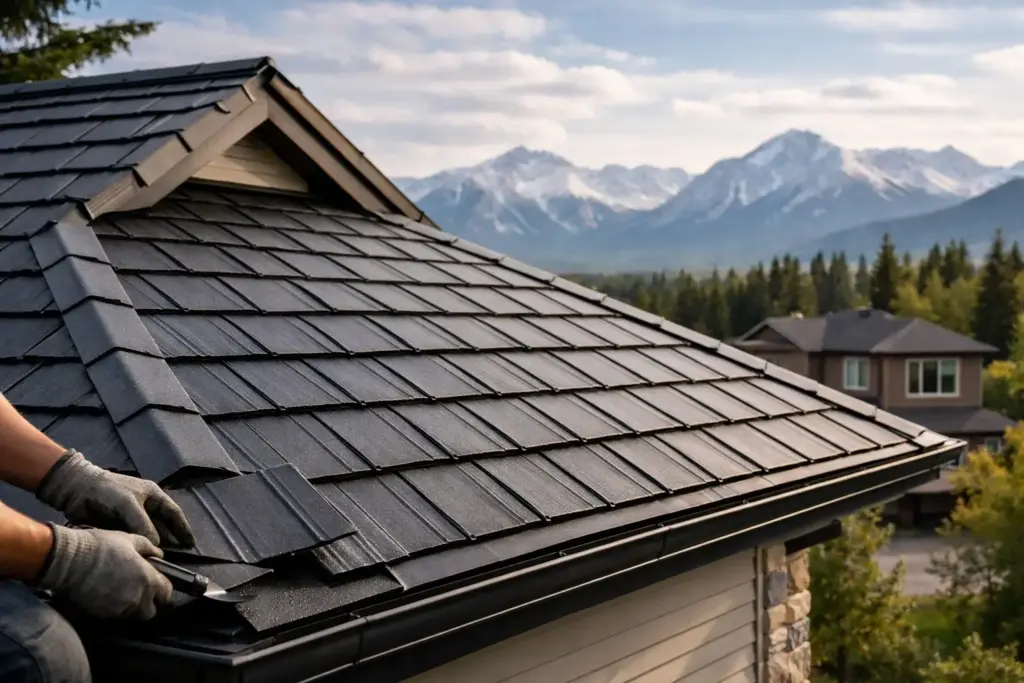
A roof on an Alberta acreage home is exposed to more than rain. It carries deep snow, absorbs intense sun, faces high winds, and moves through dramatic temperature changes every year. This metal shingles review looks at whether a premium metal shingle system is a sound long-term choice for homeowners and builders who expect more than a short-cycle roof replacement.
Metal shingles can deliver the refined appearance of slate, shake, or traditional architectural shingles while offering the durability of steel or aluminum. But the result depends on the product, roof design, underlayment, ventilation, flashing, and installation standard. Premium roofing is not simply a material purchase. It is a complete system.
What Metal Shingles Actually Are
Metal shingles are formed roofing panels designed to create a layered, dimensional appearance. Unlike standing seam roofing, which uses long vertical panels and exposed architectural lines, metal shingles are typically smaller interlocking sections installed in courses. Their profile suits homes where the owner wants the permanence of metal without the commercial or contemporary look of a vertical-panel roof.
Quality metal shingle systems are generally made from coated steel or aluminum. Steel offers strength and a crisp profile, while aluminum can be a practical choice in certain moisture-prone environments because it does not rust. The correct option depends on the roof’s design, local exposure, desired finish, and the manufacturer’s complete system requirements.
For custom homes, estate properties, and renovations where architectural character matters, metal shingles can provide a more traditional roofline than standing seam while maintaining the core benefits of metal.
Metal Shingles Review: Performance in Alberta Conditions
The strongest argument for metal shingles is lifecycle performance. A properly specified and installed system can withstand the conditions that shorten the life of many conventional roofs: wind uplift, snow loading, ice, ultraviolet exposure, and repeated freeze-thaw cycles.
Snow shedding needs planning
Metal roofing sheds snow more readily than rough-surfaced asphalt roofing. This can reduce the amount of snow sitting on the roof for extended periods, but it also means snow can release quickly when conditions change. That is useful on many slopes, yet it must be considered around entrances, walkways, decks, lower roof sections, and mechanical equipment.
Snow retention is not an afterthought. Snow guards should be planned as part of the roof system, positioned for the roof pitch, panel layout, snow load, and areas below. A contractor who treats snow management as a last-minute accessory is not designing for an Alberta winter.
Wind resistance depends on the full assembly
Interlocking metal shingles can perform exceptionally well in high-wind areas when fastened and detailed according to the manufacturer’s requirements. The strength comes from the panel lock, fastening pattern, edge treatment, and the integrity of the substrate beneath it.
This is where installation quality becomes decisive. A premium shingle cannot compensate for poorly prepared decking, weak perimeter details, inadequate flashing, or shortcuts around valleys and penetrations. Wind finds the vulnerable point, not the strongest panel.
Temperature swings test every roof detail
Alberta roofs can move from severe cold to bright winter sun, then through rapid warm-ups and refreezing. Metal naturally expands and contracts with temperature changes. Properly engineered systems account for this movement through fastening methods, panel design, and detailing.
The practical concern is not whether metal moves. It does. The question is whether the roof has been installed to manage that movement without oil canning, loosened fasteners, stressed flashings, or water entry points. That is one reason experience with the specific product matters more than a general claim of metal roofing experience.
Appearance: Where Metal Shingles Stand Apart
Metal shingles are often chosen for appearance as much as endurance. They work particularly well on homes with steep slopes, gables, dormers, and layered roof forms where long standing seam panels may not be the preferred visual fit.
A well-selected profile can complement timber, stone, stucco, brick, or fluted composite façade materials without competing with them. The roof reads as intentional architecture rather than a maintenance item. For high-value properties, that distinction matters.
There are trade-offs. Metal shingles have more visible joints and courses than standing seam systems. On simple, low-slope modern rooflines, standing seam may look cleaner and may be easier to detail. On more traditional or complex residential designs, metal shingles often create the stronger architectural result.
Colour should also be selected with care. Darker finishes can create a strong, premium contrast and help a roof recede visually against a large façade. Lighter tones can suit rural homes, warmer exterior palettes, and properties exposed to substantial summer sun. The finish should be chosen alongside siding, trim, windows, and exterior metalwork, not in isolation.
Installation Is the Deciding Factor
A metal shingle roof is only as reliable as its installation. The roof deck must be sound, dry, and properly prepared. Underlayment selection matters, especially around eaves, valleys, transitions, and areas vulnerable to ice damming. Flashings must be formed and integrated correctly at chimneys, skylights, walls, vents, and roof changes.
Complex roof geometry raises the need for precision. Valleys, dormers, intersecting slopes, and penetrations create more cuts and more transition points. This does not make metal shingles unsuitable for complex homes. It means the project requires accurate layout, disciplined sequencing, and installers who understand how water, snow, and metal movement behave at each detail.
Ventilation also deserves attention. A roof system should be assessed as part of the building envelope. Inadequate attic ventilation and insulation can contribute to uneven snow melt, ice buildup, condensation, and avoidable stress on any roofing material. Replacing the roof without addressing obvious ventilation issues can preserve the cause of the problem beneath a more expensive finish.
At Hazinasky Roofing LTD., the approach is to evaluate material selection and installation details together. That is the standard required for a roof expected to perform for decades, not merely look good at completion.
Cost and Long-Term Value
Metal shingles cost more upfront than conventional asphalt shingles. For homeowners comparing quotes line by line, that difference can be substantial. The higher initial investment reflects the material, specialized accessories, detailed flashing work, skilled labour, and the added time required to install a complete system correctly.
The value case is based on a longer ownership horizon. A well-built metal shingle roof can reduce the likelihood of recurring replacement cycles and may require less intervention than lower-cost roofing materials exposed to harsh weather. It can also support resale appeal when the rest of the home is positioned as a premium property.
That does not mean metal is automatically the lowest-cost choice for every project. If a property will be sold quickly, if the roof structure needs major work first, or if the budget cannot support proper detailing, an owner should assess the timing carefully. A cheaper roof installed well is better than a premium system installed under pressure and compromised by shortcuts.
When comparing proposals, look beyond the visible shingle. Confirm the exact product and finish, underlayment scope, ventilation work, flashings, valley treatment, snow retention, disposal, warranty coverage, and how roof penetrations will be handled. A quote that seems lower may simply exclude the details that make the system durable.
Maintenance Expectations
Metal shingles are low maintenance, not maintenance-free. Annual visual checks are sensible, particularly after major wind events or heavy snow seasons. Homeowners should watch for debris buildup in valleys, blocked gutters, damaged sealants around roof penetrations, and changes to flashings or snow guards.
Avoid allowing incompatible metals to contact the roof, as this can contribute to corrosion in certain conditions. Contractors working on satellite equipment, chimneys, solar systems, or exterior additions should understand the roofing system before fastening anything through it.
Most routine maintenance is preventative. Keeping drainage paths clear and addressing small issues early protects the roof’s finish and the building envelope below it.
Is a Metal Shingle Roof the Right Choice?
Metal shingles are a strong option for Alberta homeowners who want durable performance with a traditional or dimensional architectural look. They are particularly well suited to acreage homes, custom builds, premium renovations, and properties where long-term maintenance costs and exterior presentation both carry weight.
They are not the right answer simply because they are metal. The roof must be designed for the home, installed as a complete system, and detailed for snow, drainage, ventilation, and wind exposure. Those decisions determine whether the investment delivers its intended lifespan.
Before choosing a profile or colour, have the roof evaluated as part of the entire exterior. A disciplined assessment of slope, structure, drainage, architectural style, and site exposure gives you a roof system that belongs on the property and is built to stay there.