
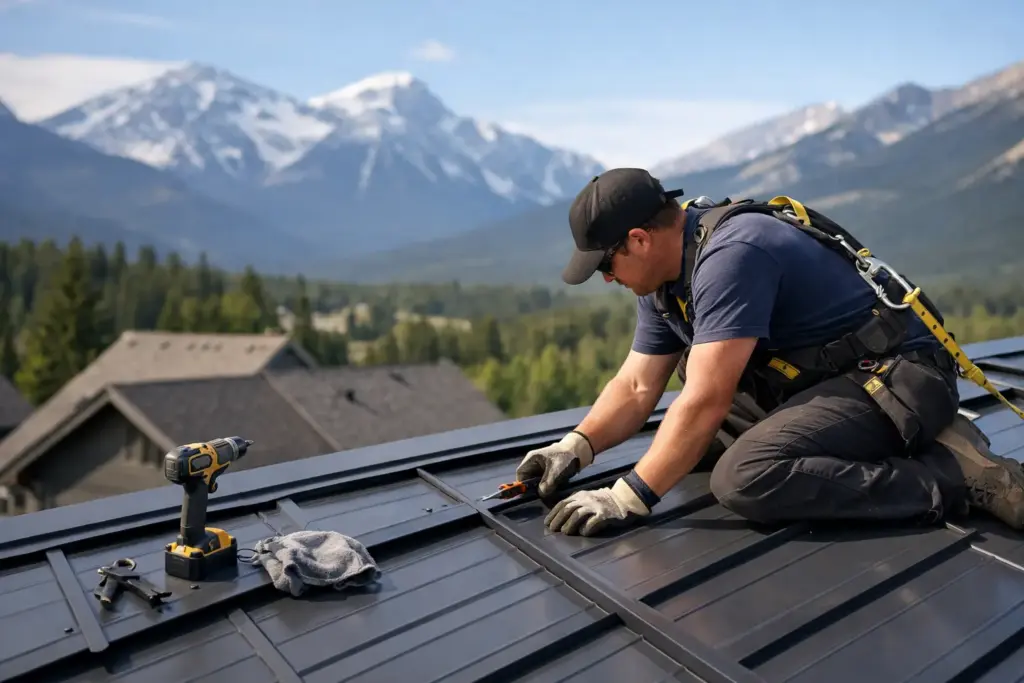
A premium metal roof is built to reduce lifecycle concerns, not eliminate the need for oversight. This guide to metal roof maintenance is designed for Alberta property owners who want to protect a serious investment through heavy snow, wind exposure, hail, and repeated freeze-thaw cycles. The goal is straightforward: identify small issues early, preserve the roof system’s drainage and movement capacity, and avoid unnecessary work that can damage a properly installed roof.
Metal roofing requires less routine attention than many conventional systems, but it is not maintenance-free. Its long-term performance depends on details: clear valleys and gutters, secure flashings, intact sealants where they are specified, and a roof structure that can shed water and snow as designed.
Start With Safe, Scheduled Inspections
For most Alberta homes, a visual inspection twice each year is a sensible baseline – once after snow season and once after the main fall leaf drop. Add an inspection after a significant hailstorm, extreme wind event, or ice dam occurrence. Acreage homes and properties with mature trees, open-field wind exposure, or complex roof geometry may need more frequent observation.
Most inspections can begin from the ground with binoculars, from accessible windows, and from within the attic. Look for branches resting on the roof, debris collecting in valleys, displaced snow guards, bent gutters, loose downspouts, and unusual staining below roof edges or penetrations.
Avoid walking on the roof unless the system manufacturer and installer permit it and the conditions are safe. Standing seam panels, metal tiles, and metal shingles each have specific load-bearing areas. Stepping in the wrong location can deform a panel, compromise a coating, or affect a concealed fastening detail. A professional inspection is the right choice for steep slopes, high roofs, icy surfaces, or any concern that cannot be confirmed safely from the ground.
Keep Water Moving Off the Roof
A metal roof is highly effective at shedding water, but drainage components still need attention. Leaves, pine needles, dirt, and windblown debris can collect in valleys, behind chimneys, around skylights, and at gutter lines. When debris holds moisture against the roof or blocks runoff, it can create avoidable stress at flashings and transitions.
Clean gutters and downspouts at least in spring and fall, and more often where trees overhang the home. Confirm that downspout extensions direct water away from the foundation. During a thaw, check whether water is overflowing at the eaves or backing up in a gutter. The issue may be a blockage, but it can also point to poor gutter slope, insufficient outlet capacity, or ice buildup.
Do not use sharp tools to scrape debris or ice from metal panels. A scratched coating is not always an immediate failure, but it should be avoided. Soft brushes and careful hand removal are generally safer for accessible debris. If material is trapped beneath a flashing or in a difficult valley, have it assessed rather than forcing it out and disturbing the detail.
Watch Valleys, Eaves, and Roof Penetrations
Valleys and penetrations deserve closer attention because they manage concentrated water flow. Check the visible areas around plumbing vents, chimneys, skylights, wall transitions, and mechanical curbs for accumulated debris, lifted edges, cracked sealant, or staining.
Sealants are not the primary defence on a well-designed metal roof. Properly formed flashings, underlayment, closures, and drainage paths do the critical work. However, certain penetrations and termination details use compatible sealants as part of the assembly. If sealant becomes brittle, detached, or visibly deteriorated, it should be repaired with a product approved for that roofing system. Generic caulking can react poorly with coatings or fail under Alberta’s temperature swings.
Manage Snow Without Damaging the System
Snow is normal on an Alberta roof. The correct response depends on roof pitch, roof design, snow retention equipment, insulation performance, and the snow load conditions at the property. Do not assume every roof needs to be cleared after every snowfall.
Snow guards are often installed to control sudden releases over entrances, walkways, decks, driveways, or lower roof sections. Inspect them from the ground after winter for loose components, bent rails, or unusual panel distortion. Snow guards must be engineered and attached for the specific roof system. Adding aftermarket devices or moving existing ones without a proper design can overload panels or concentrate stress where it does not belong.
Ice at the eaves should also be treated as a building-envelope signal, not simply a roofing problem. Ice dams often develop when heat loss from the house melts snow higher on the roof, then water refreezes at colder eaves. Better attic air sealing, insulation, ventilation, and drainage can be part of the solution. Repeatedly chopping ice from the roof edge is not. It can damage coatings, flashings, gutters, and the people doing the work.
If snow removal is required due to a specific load concern, use a qualified contractor familiar with metal roofing. The contractor should understand where tools can be used, how far back from the metal surface to work, and how to protect snow guards, flashings, and gutters.
Check for Movement, Fasteners, and Coating Damage
Metal expands and contracts as temperatures change. Premium systems are designed to accommodate this movement, particularly standing seam roofs with engineered clips and concealed fastening methods. Maintenance should never restrict that movement by adding unapproved fasteners, rigid patches, or incompatible accessories.
From safe viewing points, look for panels that appear unusually wavy, open seams, loose trim, rattling components after wind, or flashing that has pulled away from an adjacent wall. Some minor visual variation can occur with metal roofing depending on light, panel profile, substrate conditions, and temperature. What matters is a change from the roof’s original appearance or a sign that water-shedding details are no longer secure.
Also inspect for scratches, abrasions, or impact marks caused by branches, service work, ladders, satellite installations, or hail. Many high-quality metal coatings are durable, but exposed base metal, deep gouges, and punctures require assessment. Do not apply a touch-up product without confirming coating compatibility and repair requirements. An incorrect repair may be more noticeable than the original mark and may not perform as intended.
Protect the Roof During Other Exterior Work
A metal roof is frequently damaged not by weather, but by unrelated trades. Eavestrough replacement, chimney work, solar installations, siding projects, satellite mounting, and tree trimming all create risk if crews are unfamiliar with the roofing system.
Before exterior work begins, establish where ladders can be placed, where materials can be staged, and whether roof access is necessary. No one should screw brackets, signs, wires, or equipment through metal panels without a system-specific detail. Penetrations need proper flashing and integration with the roof assembly, not a bead of sealant around a screw.
Tree maintenance also deserves planning. Keep branches from rubbing across panels in high winds and remove dead limbs that could fall during a storm. The objective is clearance, not aggressive pruning that leaves the property exposed or compromises landscaping around a custom home.
Know When to Call a Metal Roofing Specialist
Call for a professional assessment if you see interior water staining, persistent attic moisture, an open seam, displaced flashing, a loose snow guard, puncture damage, or material movement after high winds. The same applies after major hail. Some hail events cause only cosmetic marks, while others can affect flashings, penetrations, or roof accessories. The roof should be evaluated on evidence, not assumptions.
Keep a simple record of inspections, storm events, and repairs. Photographs taken from the same locations each season can help establish whether a detail is changing. This documentation is useful for long-term planning, warranty conversations, insurance claims, and future property sales.
A Guide to Metal Roof Maintenance That Respects the System
The best maintenance plan is measured, not excessive. Keep drainage clear, monitor the roof after demanding weather, protect it from careless trade work, and address legitimate concerns before they become building-envelope repairs. A premium metal roof performs at its best when maintenance respects the engineering already built into the system.
For homeowners who value predictable ownership costs, a seasonal inspection is a small discipline with a meaningful return. Treat the roof as part of the property’s long-term performance strategy, and it can continue protecting the architecture, structure, and value beneath it for decades.