
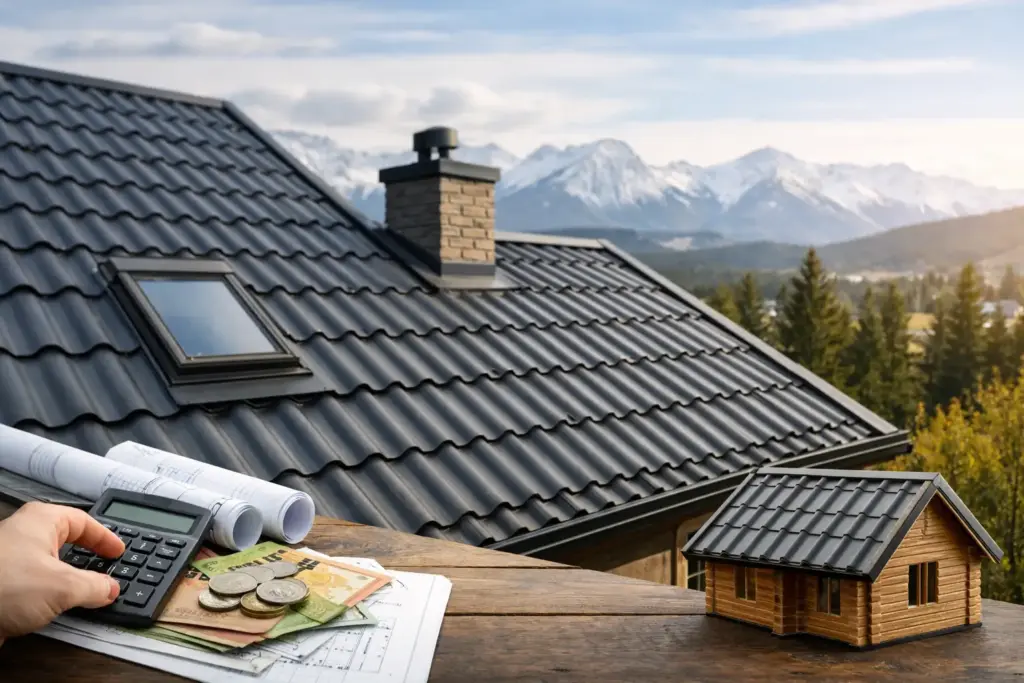
A metal tile roof cost is rarely a simple per-square-foot number, especially in Alberta. On an acreage home or custom build, the final investment reflects more than the visible roof covering. It includes the roof geometry, the condition of the existing structure, snow and wind requirements, material profile, drainage details, and the precision of the installation.
For property owners who intend to keep and protect a high-value home, the better question is not only, “What does it cost?” It is, “What will this roof cost over the years I own the property?” A properly specified metal tile system can require a higher initial investment than asphalt shingles, but it is built to reduce the cycle of replacement, repair, and weather-related uncertainty.
What Is the Metal Tile Roof Cost in Alberta?
Metal tile roofing is a premium system, and prices vary considerably by project. A straightforward roof with simple gables, clear access, and a sound deck will cost less than a steep, complex roof with multiple valleys, dormers, skylights, chimneys, and difficult site conditions.
For Alberta residential projects, installed metal tile roofing is commonly priced as a complete system rather than a basic material purchase. The estimate should account for the metal panels, trims, fasteners, underlayment, ventilation components, flashings, snow-management considerations where required, and skilled labour. Tear-off, deck repairs, disposal, scaffolding, and access equipment may also be separate factors.
A low quote can look attractive until the scope is examined. If it excludes critical flashings, uses minimal underlayment, overlooks ventilation, or assumes no deck work, it does not represent the true cost of a finished roof. Premium roofing is not simply about installing metal on a roof deck. It is about creating a weather-managed assembly that performs through snow loads, wind exposure, ice, and repeated freeze-thaw cycles.
Material profile affects the price
European-style metal tiles are designed to provide the dimensional appearance of traditional tile while delivering the lower weight and durability benefits of coated steel. Profile depth, steel thickness, protective coating, finish, and colour selection all influence material cost.
Higher-grade coatings are particularly relevant in Alberta. A roof faces prolonged UV exposure, abrasive windborne debris, snow retention, and substantial temperature changes through the year. The coating is not a cosmetic detail. It is a key part of the system’s long-term corrosion and colour-fade resistance.
Metal tiles also require purpose-made trims to finish ridges, hips, valleys, eaves, wall transitions, and penetrations correctly. These components add to the project price, but they are where a roof either maintains a clean architectural line or becomes vulnerable to water intrusion and premature deterioration.
Roof complexity changes labour requirements
A simple roof can be measured, detailed, and installed efficiently. Complex roofs require more cutting, custom flashing work, layout planning, and material handling. Every valley, pipe penetration, skylight, chimney, and intersecting roof plane creates a detail that must be executed accurately.
Steep pitches and multi-storey elevations also affect safe access and labour time. On rural or acreage properties, distance from suppliers, site access, and the need to work around finished landscaping may add further planning requirements. These are not arbitrary additions. They are part of completing the work safely and to a professional standard.
What Should a Complete Quote Include?
A reliable quote should make the scope clear enough for a homeowner, builder, or investor to compare more than a bottom-line total. The strongest proposals explain what will be installed, what site conditions could change the price, and how the contractor will manage critical roof details.
Look for clarity around the roofing profile and finish, the underlayment system, ventilation approach, flashing package, tear-off or overlay work, and treatment of valleys and penetrations. If the existing roof is being removed, the quote should address deck inspection and how damaged sheathing will be handled if discovered.
For homes exposed to drifting snow or large roof planes, it is also worth discussing snow retention and drainage behaviour. Metal sheds snow efficiently, which is a major performance advantage when the roof is designed for it. However, concentrated snow release over entryways, decks, walkways, mechanical equipment, or lower roof sections must be considered before installation begins.
A contractor should also identify exclusions rather than leaving them implied. Electrical work, chimney repairs, structural corrections, fascia replacement, and major deck repairs may sit outside the initial roofing scope. Clear exclusions are not a weakness in a quote. They show that the contractor is defining responsibility properly.
Why Alberta Conditions Matter to the Investment
Alberta roofs face a demanding combination of heavy snow, high winds, sudden hail events, dry summer heat, and deep winter cold. A roofing decision that looks economical in a mild climate may have a very different outcome here.
Metal tile systems offer several advantages for this environment. They are lightweight compared with many traditional tile products, resist fire, and can be engineered for strong wind performance when installed as specified. Their interlocking design and durable coated-steel construction make them well suited to homeowners who want a roof that holds its form and appearance over a long service life.
That said, metal roofing does not eliminate the need for good building science. Attic ventilation, insulation continuity, roof-deck condition, and proper flashing all matter. Ice dams are often connected to heat loss and ventilation issues within the home, not simply the roof material. Installing premium metal over unresolved moisture or ventilation problems is not a long-term solution.
This is where specialized installation matters. The roof must be planned as part of the building envelope, not treated as a surface-only upgrade.
Comparing Metal Tile Roofing With Asphalt Shingles
Asphalt shingles generally have a lower initial purchase and installation cost. For a property being prepared for a short-term sale, that may be the deciding factor. But lower entry cost is not the same as lower ownership cost.
A shingle roof can be exposed to granule loss, curling, thermal movement, wind damage, and periodic replacement over the life of a home. On a large custom residence, the cost and disruption of repeat tear-offs can become significant. Each replacement also brings another round of disposal, site work, and risk of hidden deck damage.
A metal tile roof is often chosen by owners who plan to remain in the home, maintain a premium exterior, or protect a property with strong resale expectations. Its value lies in lifecycle performance: fewer replacement cycles, lower routine maintenance demands, durable appearance, and a roofing system that supports the architectural standard of the home.
The trade-off is upfront capital. Premium materials and specialized labour cost more than entry-level roofing. The return is strongest when the roof is installed correctly, maintained sensibly, and kept for the long term.
Where Owners Can Make Smart Cost Decisions
The goal is not to strip every dollar from a roofing project. It is to spend money where it protects performance and avoid paying for changes that do not serve the home.
Start with the correct profile for the architecture. A European-style tile can suit traditional, transitional, and estate-style homes exceptionally well, but the colour, profile depth, and trim detailing should work with the siding, stone, windows, and surrounding landscape. A roof is a dominant visual plane. Poor material selection is expensive to live with.
Next, prioritize substrate and water-management details over superficial savings. A premium panel cannot compensate for poor valley work, inadequate flashing, or compromised decking. If a quote offers a meaningful cost reduction by cutting these areas, it is shifting risk into the future.
Finally, plan related exterior work together when practical. Fascia, soffit, gutters, wall cladding transitions, and roof drainage often meet at the same critical edges. Coordinating these details can produce a cleaner finish and reduce the chance of rework later.
The Cost of Installing It Once, Done Right
The right metal tile roof cost is the cost of a complete system designed for the home, the site, and Alberta weather. It should account for materials that will hold their finish, details that manage water and snow, and workmanship capable of meeting the system’s requirements.
For a high-value property, roofing is not the place to purchase the cheapest acceptable option. It is a decision about how often you want to revisit one of the most exposed and consequential parts of the building. A detailed assessment and a properly defined scope give you the confidence to invest once, with a roof built to stay the course.