
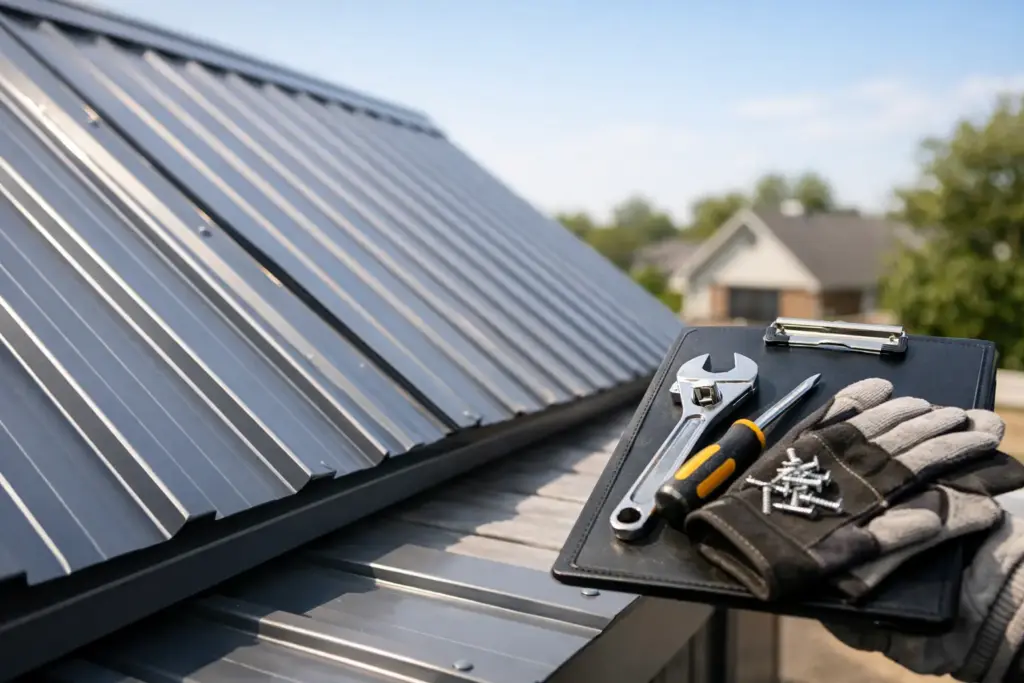
For Alberta property owners, the question, ‘can metal roofs reduce maintenance,’ is tied directly to long-term ownership costs. A roof that needs repeated patching, replacement shingles, ice-dam repairs, or storm-related attention can become an ongoing liability. A properly specified and installed metal roofing system can significantly reduce that burden, particularly on acreage homes, custom builds, and investment properties exposed to severe weather.
The key word is properly. Metal roofing is not maintenance-free, and premium materials cannot compensate for poor detailing or unsuitable installation. When the system, slope, ventilation, flashings, fasteners, and snow-management strategy are designed as one package, metal roofing offers a far more predictable maintenance profile than many conventional roofing materials.
How Metal Roofs Reduce Maintenance Over Time
A metal roof reduces maintenance primarily because it is built to resist the failures that commonly affect asphalt-based systems. Quality metal panels and tiles do not absorb water, crack from prolonged sun exposure in the same way, or shed surface granules as they age. They also create a continuous, durable exterior surface that handles Alberta’s freeze-thaw cycles with fewer vulnerable points.
Snow shedding is another practical advantage. On the right roof design, a smooth metal surface allows snow and ice to release more readily than rougher roofing materials. This can reduce prolonged moisture exposure and lessen the weight load that remains on the roof through winter. It must be managed carefully around entrances, walkways, decks, and lower roof sections, but it is an advantage when planned correctly.
Metal is also highly resistant to wind damage when panels, trims, and flashings are installed to the required specifications. High winds can lift, crease, or remove conventional shingles, especially once they begin to age. A mechanically secured standing seam system or quality metal tile installation provides a more stable exterior envelope for exposed Alberta sites.
The Maintenance Problems Metal Can Help Prevent
No roof can eliminate every service call. What metal roofing can do is reduce the likelihood of recurring issues that lead to expensive reactive repairs.
Fewer surface repairs
Asphalt roofs often require attention as tabs lift, granules wear away, seal strips fail, or localized damage develops after wind and hail events. Metal does not rely on thousands of overlapping shingle tabs. Its surface is cleaner, more uniform, and less prone to small, repeated patch repairs.
Better moisture resistance
Water intrusion usually begins at details, not in the broad field of the roof. However, a metal roof’s long panels, integrated seams, and precisely formed flashings reduce the number of potential water pathways when compared with many layered roofing assemblies. This is especially valuable around valleys, wall transitions, chimneys, skylights, and roof penetrations.
Reduced organic growth
Moss, algae, and trapped debris can shorten the service life of some roof coverings. While Alberta’s climate does not create the same organic-growth pressure as wetter coastal regions, shaded roof sections still collect debris and retain moisture. Metal’s smooth finish makes buildup easier to spot and easier to clear before it becomes a larger issue.
More stable appearance
Maintenance is not only about leaks. On high-value properties, faded, curling, stained, or uneven roofing affects curb appeal and resale confidence. Premium metal roofing retains a clean architectural appearance for much longer, provided the coating system and product are appropriate for the project.
Metal Roofing Still Requires Inspection
Calling metal roofing maintenance-free creates the wrong expectation. A roof is part of a larger building system, and all exterior systems benefit from routine inspection. The difference is that inspections for a well-installed metal roof are typically preventive rather than driven by visible failure.
A practical approach is to inspect the roof and drainage details annually, as well as after a major windstorm, hail event, or heavy snow season. Look for accumulated debris in valleys and gutters, damaged sealants around penetrations, loose accessories, blocked drainage paths, and signs of impact damage. Ground-level visual checks can identify many concerns, while a professional inspection is appropriate where access is difficult or a detail requires closer review.
Fasteners deserve attention on exposed-fastener metal systems. Over time, temperature movement and weather exposure can affect gaskets and fastener tension. Standing seam systems conceal their fastening method and allow for controlled panel movement, which can reduce this particular maintenance concern. That does not make one system universally better than another, but it does affect long-term service requirements.
Installation Quality Determines the Result
The strongest argument for metal roofing is not simply the material. It is the complete installation. A premium panel installed without proper underlayment, ventilation, flashing integration, or allowance for thermal movement will not deliver premium performance.
Alberta’s temperature swings make this especially relevant. Metal expands and contracts as temperatures change. Professional installation accounts for that movement through the panel profile, clip system, fastening method, and trim details. If panels are restrained incorrectly, the roof can develop noise, distortion, damaged fasteners, or premature wear at connection points.
Water management must also be designed, not improvised on site. Snow guards, valley details, eave protection, transitions to wall cladding, and gutter placement should reflect the home’s roof geometry and the way snow moves across it. On a large acreage home or custom build, these details protect more than the roof. They help protect entries, landscaping, soffits, exterior finishes, and the people moving around the property.
When Metal May Not Be the Simplest Choice
Metal roofing has a higher upfront cost than standard asphalt shingles, and that difference matters on any project. If a property is being prepared for a short-term sale, or if the roof structure requires significant repairs before installation, the immediate budget may point toward a different solution.
Roof complexity also affects cost and maintenance planning. A straightforward gable roof is efficient to cover in long metal panels. A roof with numerous dormers, tight valleys, decorative transitions, and penetrations requires more custom flashing work. Metal remains a strong option, but the project must be priced and detailed honestly rather than treated as a basic replacement.
Noise is another concern homeowners raise. With proper roof decking, insulation, attic design, and underlayment, rain noise inside the home is generally not a practical issue. The more relevant questions are whether the roof assembly is correctly designed and whether the selected profile suits the architecture.
Choosing a Lower-Maintenance Metal Roof System
The best system depends on the building and the owner’s priorities. Standing seam metal roofing is a strong choice for clean-lined contemporary homes, low-maintenance performance, and concealed fastening. European-style metal tiles can provide a more traditional profile while offering metal’s durability and weather resistance. Metal shingles may suit properties that require a more textured, classic appearance without returning to a short-lifecycle roof covering.
The material thickness, coating quality, panel profile, substrate condition, roof ventilation, and installation experience should all be considered before colour or appearance alone. A lower-maintenance result comes from selecting the right assembly for the property, not from choosing the most expensive panel on a sample board.
The Long-Term Value Is Predictability
For owners of higher-value Alberta properties, maintenance is often less about avoiding every task and more about avoiding surprises. A metal roof can reduce the cycle of repairs, visual deterioration, and premature replacement that makes conventional roofing difficult to budget over time. It also provides an exterior finish that supports the architectural standard of a custom home rather than becoming the first part of it to look tired.
The right next step is to assess the roof as a complete system: its slope, exposure, drainage, insulation, snow behaviour, and architectural intent. When those factors are addressed before installation, metal roofing becomes a practical long-term decision – install it once, and maintain it with confidence.