
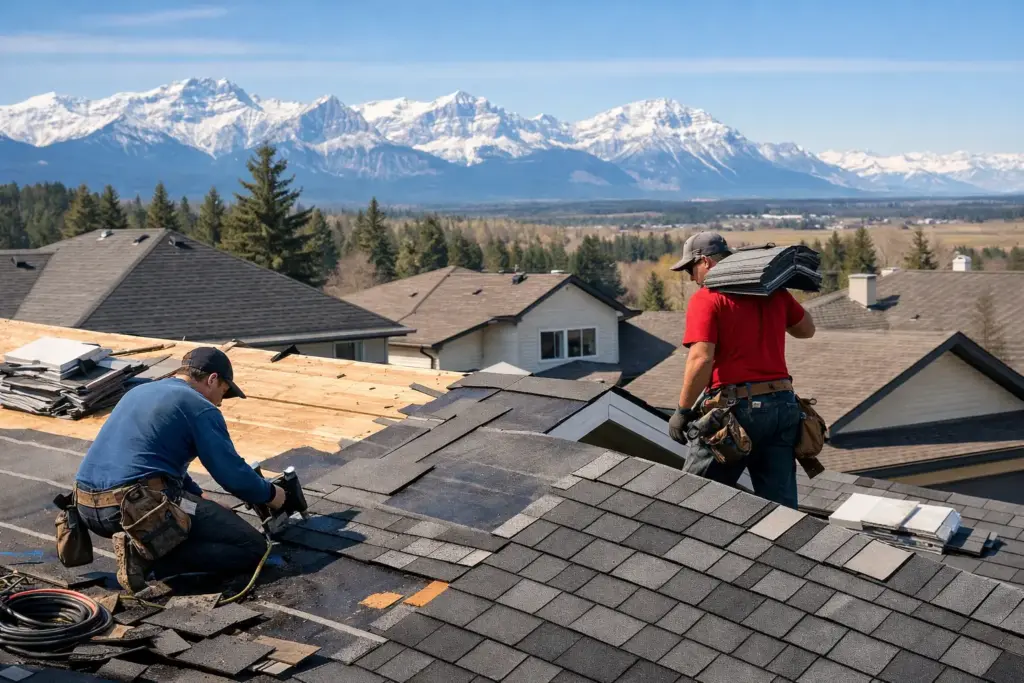
A roof replacement decision often starts after a visible problem – a leak, lifted shingles, ice damage, or a roof that simply looks tired. On a high-value Alberta home, that is too late to make every decision under pressure. Knowing how to plan roof replacement properly gives you time to assess the full exterior, choose materials for the climate, and invest in work that protects the property for decades rather than a few seasons.
For acreage homes, custom builds, and investment properties, the roof is not a standalone surface. It is part of the building envelope, the architectural profile, and the long-term maintenance plan. A replacement should be approached as a capital project with clear priorities, not as a quick repair with a larger invoice.
Start With a Full Roof and Exterior Assessment
Do not base a replacement plan on the visible roof covering alone. Asphalt granule loss, rust staining, curled edges, cracked flashing, or recurring leaks are useful warning signs, but they do not explain the condition of the roof deck, ventilation, insulation, valleys, penetrations, or drainage details.
A proper assessment should identify why the existing roof is underperforming. A roof may be near the end of its service life, but it may also have been compromised by inadequate ventilation, poorly designed eaves, insufficient flashing, or installation shortcuts around skylights and chimneys. Replacing the surface without correcting these conditions can repeat the same failure pattern beneath more expensive materials.
For Alberta properties, pay close attention to snow management and wind exposure. Open acreage sites, ridge-top homes, and properties near large fields can experience wind forces that differ significantly from dense urban neighbourhoods. Heavy snow loads, freeze-thaw cycles, and ice buildup at eaves also affect the details your replacement project requires.
Ask for a clear scope that addresses the roof system as a whole: deck preparation, underlayment, ice and water protection, ventilation, flashings, fasteners, transitions, drainage, and disposal. If you are considering a façade upgrade, this is also the right time to review roof-to-wall transitions, soffits, fascia, and exterior cladding details.
How to Plan Roof Replacement Around Your Priorities
Before comparing quotes, decide what the new roof must accomplish. Cost matters, but it should not be the only measure. The right system depends on how long you expect to own the property, the home’s architecture, its exposure, and the level of ongoing maintenance you are willing to accept.
A short-term resale strategy may call for a different decision than a forever home or a custom build intended to retain its appearance over decades. Yet even for investors, a roof with lower maintenance demands and stronger curb appeal can support the property’s position in the market.
Set priorities in a practical order. First comes weather protection and structural reliability. Then consider lifecycle cost, architectural fit, maintenance requirements, and visual impact. A roof that looks excellent but uses weak details at valleys or wall intersections is not a premium installation. Likewise, a durable system that clashes with the home’s scale or style can diminish the value of an otherwise well-designed property.
Metal roofing is often a strong fit for Alberta homes because it is designed for long service life, wind resistance, and snow shedding when specified and installed correctly. Standing seam metal roofing offers clean lines and a disciplined contemporary profile. European-style metal tiles and metal shingles can provide a more traditional or textured appearance while retaining the benefits of metal. The best choice depends on the architecture, roof geometry, and detailing requirements, not on a generic product ranking.
Build a Budget Around Lifecycle Value
The lowest quote rarely provides the clearest picture of project value. Roofing estimates can vary because materials vary, but also because scopes vary. One contractor may include full ice protection, premium flashings, ventilation corrections, and removal of existing layers. Another may price only the visible replacement work.
Review every proposal for what is included and what remains uncertain. Confirm the roof area and complexity, material profile and finish, underlayment type, flashing scope, deck repair allowances, ventilation work, snow retention where needed, site protection, disposal, and warranty coverage. If a quote is substantially lower, find the missing detail before assuming you have found a better deal.
Metal roofing typically requires a higher initial investment than basic asphalt shingles. The trade-off is a system built for much longer service life, reduced replacement frequency, and a more refined architectural result. It can be the more economical choice over the ownership period, particularly when recurring replacement, repairs, and disruption are considered.
Keep a contingency for concealed conditions. Once the old roof is removed, damaged sheathing, inadequate framing support, or past water intrusion may become visible. A disciplined plan does not treat this as an unexpected failure of the project. It allows for it from the beginning.
Select the Right Season and Project Timeline
Roof replacement can be completed through much of the year, but scheduling should reflect Alberta weather rather than a fixed calendar rule. Spring and summer often provide more predictable working conditions, while fall can be an effective installation period if the project is planned before weather becomes unstable. Material handling, sealant performance, snow risk, and safe access all affect scheduling.
The most reliable approach is to begin planning before the roof becomes urgent. Allow time for inspection, system selection, colour decisions, estimating, material ordering, and scheduling. Premium metal profiles and custom components may require lead time, especially when the project includes detailed flashings or coordinated exterior work.
Discuss how the contractor manages weather exposure during installation. A professional crew stages the work to keep the building protected, monitors forecasts, and does not leave critical areas vulnerable simply to maintain a schedule. The goal is progress without compromising the structure below.
Do Not Treat Installation Details as Secondary
Premium roofing materials perform only as well as the installation behind them. This is especially true with metal systems, where panel alignment, fastening methods, thermal movement, flashing design, and transition details all affect appearance and long-term performance.
Ask how the system will handle valleys, chimneys, skylights, plumbing vents, dormers, roof-to-wall connections, and low-slope areas. These are the locations where water management matters most. A clean roofline should not come at the cost of inadequate drainage or improvised flashing.
Ventilation deserves the same attention. Poor attic ventilation can contribute to moisture accumulation, uneven roof temperatures, ice damming, and premature material stress. The correct solution depends on the home’s existing assembly and insulation strategy. It is not always a matter of adding more vents. It is a matter of achieving a balanced, properly designed system.
For homes with solar panels, satellite equipment, skylights, or complex mechanical penetrations, coordinate the work early. Removing and reinstalling equipment after the roof is complete may require separate trades and can affect both timing and warranty responsibilities.
Protect the Property During Construction
Roof replacement is active construction work, not just an exterior upgrade. Confirm how landscaping, driveways, windows, decks, and site access will be protected. This is particularly relevant on acreage properties with mature landscaping, long driveways, detached structures, or limited access for delivery vehicles and waste bins.
Establish one point of contact, clarify the daily work schedule, and plan for children, pets, tenants, or business operations on the property. If the home will remain occupied, ask what noise, vibration, and temporary access limitations to expect.
A capable contractor should also explain cleanup standards. Magnet sweeping for fasteners, debris removal, and final inspection are not minor extras. They are part of finishing the project properly.
Use the Project to Improve the Whole Exterior
A roof replacement creates an opportunity to resolve exterior details that are harder to address later. If fascia is deteriorated, eavestroughs are undersized, or the roof colour no longer works with the façade, address those decisions while the project is underway.
For architecturally focused homes, a metal roof can be paired with fluted composite board façade elements to create a more intentional exterior composition. This is not necessary for every property, but coordinated materials can elevate a custom build or major renovation far beyond a simple roof swap.
Hazinasky Roofing LTD. approaches these projects as complete exterior systems, with material selection and installation details matched to Alberta conditions and the property’s design.
A well-planned replacement gives you more than a new roof. It gives the home a controlled path through severe weather, protects the investment beneath it, and removes one of the largest recurring maintenance risks from the years ahead. Start while you still have choices, and insist on a system that is designed to stay there.