
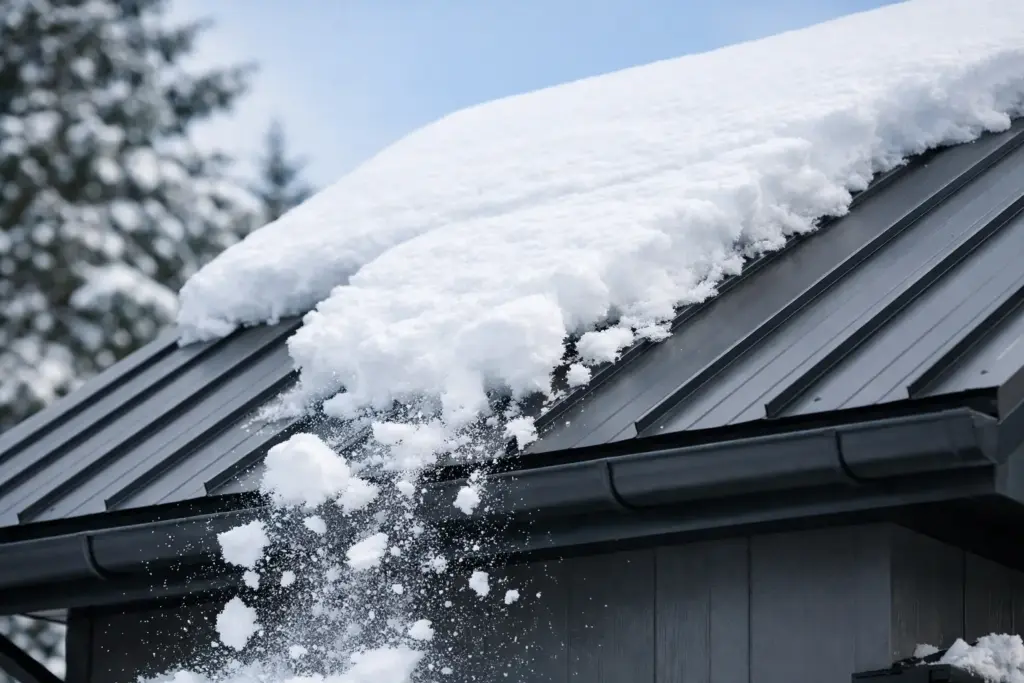
A heavy Alberta snowfall can leave a metal roof looking clean while the ground below tells a different story. Will snow slide off metal roofs? Often, yes – but not always at once, and not without careful planning. Snow shedding is one of metal roofing’s practical advantages, yet on a premium home, it must be controlled to protect people, landscaping, gutters, vehicles, and lower roof sections.
A properly designed metal roof should not rely on chance. Roof pitch, panel profile, surface finish, insulation, solar exposure, and snow retention all influence how snow behaves through the winter.
Will Snow Slide Off Metal Roofs in Alberta?
Metal roofing has a smooth, non-porous surface, so snow generally releases more readily than it does from asphalt shingles, cedar shakes, or textured concrete tile. Standing seam panels, metal shingles, and metal tiles can all shed snow, although the rate and pattern differ by system.
The key word is generally. A metal roof does not guarantee that snow will slide immediately after every storm. Snow may remain in place during prolonged cold weather, especially when temperatures stay well below freezing. It often begins to move after sunlight warms the roof surface or when a Chinook pushes temperatures upward.
When release occurs, the snow can move quickly. A thick, partially melted layer may come down in a dense sheet rather than in light, gradual amounts. That is why snow shedding must be considered as part of the roof design, not treated as an unexpected winter event.
For acreage homes and custom builds, this matters most at entry doors, garage approaches, walkways, patios, decks, mechanical equipment, and areas where people regularly park or pass beneath the eaves.
What Controls Snow Shedding on a Metal Roof?
Snow behaviour is not determined by roofing material alone. A high-quality metal roof is a system, and its performance depends on several connected decisions.
Roof pitch and panel profile
Steeper roofs encourage snow to move more easily. On a low-slope roof, snow may remain longer, even with metal panels. The panel profile also matters. Standing seam systems have long, clean runs that can allow snow to release in broad sections. Metal tile and shingle profiles add more surface contour, which can slow movement compared with a smooth standing seam roof.
Neither outcome is automatically better. A steep standing seam roof above a front entrance may need more snow retention than a low-slope rear roof over an open yard. The right choice depends on where snow will land and how the property is used.
Temperature, sun, and Alberta weather swings
Alberta winters create the conditions for both snow buildup and sudden release. Sunlight can warm a dark metal roof even when outdoor temperatures remain cold. Later, a warming period can melt the layer closest to the metal surface, creating a slippery plane beneath the snowpack.
That is when accumulated snow may slide. It can happen during a daytime thaw, overnight temperature change, or a Chinook. North-facing roof planes may retain snow longer, while south-facing planes often shed sooner. Trees, nearby buildings, and roof geometry can also create different conditions on the same home.
Insulation and attic performance
A well-insulated, properly ventilated roof assembly helps maintain a more consistent roof temperature. This reduces unnecessary heat loss from the home and lowers the risk of uneven melting that contributes to ice dams.
However, good insulation does not eliminate snow shedding. It simply prevents the building’s interior heat from becoming the main driver. Sun exposure and outdoor temperature changes will still affect the snowpack, especially during Alberta’s frequent freeze-thaw cycles.
Surface finish and roof condition
New metal panels with a quality finish are very smooth, which supports snow movement. Over time, dust, debris, or surface wear may slightly change how snow holds, but a premium metal system remains far less absorbent and rough than most conventional roofing materials.
Clean roof lines also matter. Valleys, dormers, skylights, chimneys, and transitions interrupt a snowpack. These areas can hold snow, direct meltwater, or cause snow to release in smaller and less predictable sections. Precision flashing and proper detailing are essential on complex roof designs.
When Snow Guards Are Necessary
Snow guards are retention devices installed in planned rows on a roof. Their job is not to stop snow from ever leaving the roof. Their job is to break up and slow down release, allowing snow to melt or shed in smaller, more manageable amounts.
They are commonly recommended above high-traffic and high-value areas, including:
- Main entrances, side doors, and covered walkways
- Garage doors, driveways, and regularly used parking areas
- Decks, patios, and outdoor living spaces
- Lower roof sections, roof-mounted equipment, and eaves near landscaping
On standing seam roofs, professionally designed snow guard systems can often be attached with engineered clamps that grip the seams rather than penetrating the panels. This preserves the roofing system’s weather resistance when the components are correctly specified and installed.
Not every roof plane requires snow guards. Installing them everywhere without considering structural loads and drainage can create its own problems. Retained snow adds weight, and that load must be accounted for in the roof design. Snow guards should be positioned according to panel layout, roof slope, expected snow load, and the protected area below.
Snow Guards Are Not a Substitute for Structural Design
One common mistake is treating snow retention as a simple accessory decision. On a premium metal roof, it is part of the engineering and installation plan.
A roof must be designed to carry local snow loads, including snow retained by guards. The fastening method must suit the metal profile and the underlying structure. Layout spacing must be based on the roof plane, not guessed from a photo or a generic kit. Improperly installed guards can concentrate force in the wrong location, damage panels, or fail under a heavy snow load.
Gutters need equal attention. A large uncontrolled snow slide can bend or tear gutters away from the fascia. In areas where snow is expected to shed, gutter design and placement should reflect that risk. In some cases, snow retention above the eaves is the practical solution. In others, the roof design may call for a different drainage approach.
Does Snow Shedding Reduce Ice Dams?
Metal roofing can help reduce the conditions that support ice dams because it does not absorb moisture and can shed snow effectively. But the roof covering alone cannot correct a poorly performing attic.
Ice dams form when heat escapes through the roof, melts snow above, and the water refreezes near colder eaves. The resulting ice can trap water behind it. Proper insulation, air sealing, ventilation, flashing, and drainage are the real defence.
A professionally installed metal roofing system supports that defence by creating a durable, watertight outer layer with clean drainage paths. It should be paired with a roof assembly that manages heat and moisture correctly from the inside out.
What Homeowners Should Expect After a Storm
It is normal for snow to remain on a metal roof after a fresh storm. Do not assume the roof is failing because it has not shed immediately. Avoid climbing onto the roof or trying to pull snow down from the ground. Metal panels can be damaged by improper tools, and falling snow presents a real safety risk.
Instead, keep the area beneath likely shedding zones clear when conditions begin to warm. Move vehicles away from eaves where practical, watch for snow over entry points, and maintain safe access routes around the home. If an unusual buildup is creating concern, have the roof assessed by a qualified metal roofing professional rather than attempting a risky removal.
For new construction or roof replacement, the best time to address snow movement is before installation begins. Hazinasky Roofing LTD. designs metal roofing systems around the full property condition – roof geometry, drainage, snow loads, access routes, and architectural finish – not just the panel selected.
A metal roof should give you decades of dependable protection, not a winter surprise at the front door. Plan for where the snow will go, retain it where it matters, and let the rest of the system do its job.