
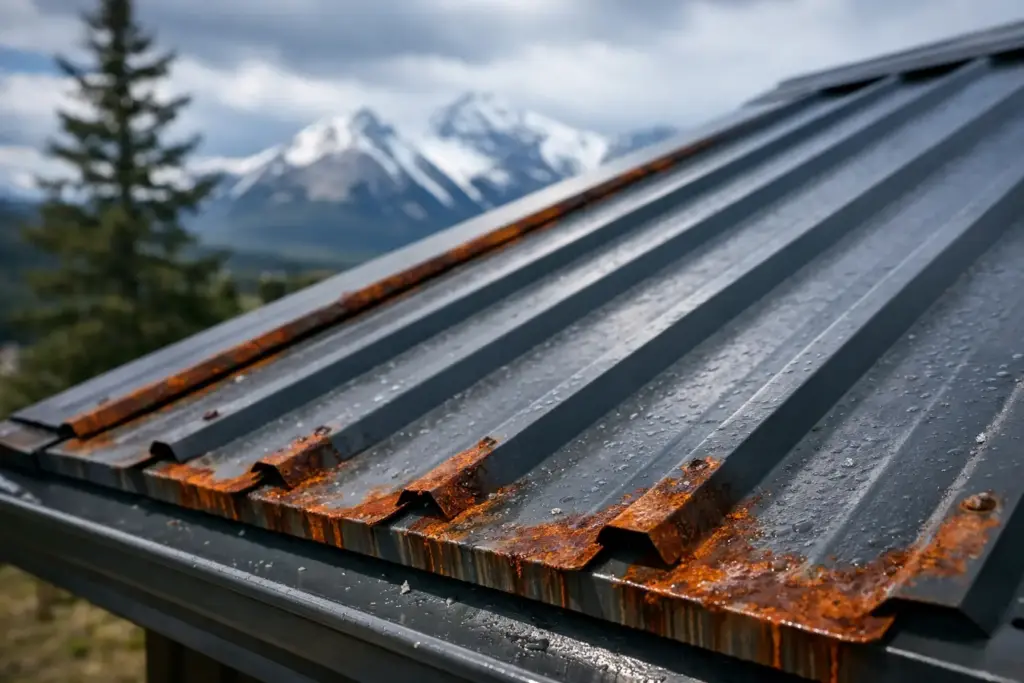
A metal roof is chosen to outlast the repair cycle that comes with many conventional roofing materials. Still, homeowners planning a custom build or acreage project often ask: can a metal roof rust in Alberta? The direct answer is yes, certain metal roofing products can corrode under the wrong conditions. A properly specified and professionally installed premium system, however, is designed to resist corrosion for decades.
The difference is not simply whether a roof is made of metal. It comes down to the metal type, protective coating, panel detailing, fastener selection, drainage design, and installation quality. In Alberta, where roofs face snow load, freeze-thaw cycles, wind-driven moisture, and sharp temperature changes, those details are the system.
Can a Metal Roof Rust? It Depends on the Material
Not all metal roofing is equally vulnerable to corrosion. Steel is the most common material used in residential metal roofing because it offers strength, clean profiles, and excellent value over its service life. Bare steel will rust when it is exposed to oxygen and moisture. Quality roofing steel is not left bare.
Premium steel roofing panels are protected with metallic coatings, usually zinc, aluminum-zinc, or a similar alloy, then finished with a durable paint system. The metallic layer protects the underlying steel, while the paint coating provides colour retention and an additional barrier against weather exposure. When the right material is selected for the project, the roof is built to manage moisture rather than surrender to it.
Aluminum does not rust in the same way steel does. It forms an oxide layer instead, which helps protect the metal beneath. That can make aluminum a sensible choice in environments with persistent moisture or salt exposure. For many Alberta residential applications, coated steel remains an excellent option because it combines structural rigidity with long-term corrosion resistance when installed correctly.
Copper and zinc also develop protective surface patinas over time, but they are specialized architectural materials with different cost and design considerations. The best choice is not always the most expensive metal. It is the system that fits the roof design, site conditions, budget, and expected ownership horizon.
Where Corrosion Usually Starts
Rust rarely appears across a high-quality panel without a cause. More often, it begins at a vulnerable point where water remains trapped, the protective coating has been damaged, or incompatible materials have been used together.
Cut edges deserve particular attention. Every roof has panel cuts around valleys, penetrations, chimneys, skylights, and roof transitions. Precision cutting and correct flashing details help ensure these areas shed water and are not left with exposed, poorly protected steel. A clean installation is not just an aesthetic standard. It directly affects long-term performance.
Scratches can also create concern, but not every scratch means a roof will fail. Minor surface marks may affect only the paint layer, while deeper damage can reach the metallic coating or steel substrate. Significant scratches should be assessed and repaired using methods approved for the roofing system. Random field touch-ups, incompatible paint, or unprotected cuts can create a weak point rather than solve one.
Fasteners, flashings, and accessories matter as much as the panels. If dissimilar metals are placed in direct contact and moisture is present, galvanic corrosion can occur. This is why professional metal roofing work requires compatible components, correct separation where needed, and a complete approach to the roof assembly.
Alberta Weather Tests Every Detail
Alberta does not offer gentle roofing conditions. Heavy snow can remain on a roof for extended periods. Spring melt can refreeze at eaves. Strong winds can push rain and snow into places a poorly detailed roof was never designed to manage. Summer heat and winter cold cause materials to expand and contract repeatedly.
A metal roof should be designed with these realities in mind. Standing seam panels, for example, use concealed fastening systems that allow for controlled thermal movement. Proper clips, panel lengths, seam details, and substrate preparation help the roof move as intended without creating stress points that compromise the finish or weather protection.
Water management is equally critical. Roof valleys, eaves, wall transitions, pipe penetrations, and snow retention areas need deliberate detailing. If meltwater repeatedly backs up beneath panels because of poor slope, inadequate underlayment, blocked drainage, or incorrect flashing, corrosion risk increases. The same is true when debris is allowed to collect in valleys or behind rooftop features and hold moisture against the roof.
The roof itself is only one part of the exterior envelope. Eavestrough placement, wall cladding transitions, ventilation, insulation strategy, and attic conditions all influence how moisture behaves around the structure.
Condensation Can Be as Damaging as Rain
Homeowners often think corrosion comes only from rain or melting snow on the roof exterior. Moisture from inside the building can be just as relevant. Warm indoor air that reaches a cold roof assembly can condense on the underside of metal panels or roof decking.
Over time, unmanaged condensation may contribute to corrosion, wet insulation, mould risk, and wood deterioration. This is particularly important for homes with vaulted ceilings, complex rooflines, large interior humidity loads, or poorly controlled attic ventilation.
The solution is not a single product. It is a properly designed assembly that considers air sealing, insulation, ventilation, underlayment, and the roof deck. Premium metal panels perform best when the supporting structure is equally well planned. A roof installation cannot correct every building-envelope issue after the fact, but an experienced contractor should identify conditions that may affect the system before work begins.
Coatings Are a Major Part of Long-Term Protection
The visible colour of a metal roof is more than a design choice. A factory-applied coating system protects the panel while also determining how well the roof maintains its appearance over time. Higher-grade finishes are engineered to resist fading, chalking, and surface breakdown under ultraviolet exposure and changing temperatures.
For a long-term residential investment, coating quality should be considered alongside panel profile and gauge. A lower-cost panel may look similar on installation day, but its finish, metallic coating weight, substrate quality, and warranty coverage may not be comparable.
Warranty language also requires careful reading. A paint warranty, a substrate warranty, and an installation warranty are not the same thing. They may cover different conditions, have different terms, and exclude damage caused by ponding water, improper maintenance, building movement, or installation outside manufacturer requirements. The goal is not to choose a roof based on the longest number printed on a brochure. It is to choose a complete system with credible material standards and disciplined execution.
Installation Determines Whether the System Performs
Even premium metal can fail early when installed carelessly. Improperly driven fasteners, rough handling, missing underlayment, poorly formed flashings, unsealed penetrations, and inconsistent panel alignment can all create opportunities for water intrusion and corrosion.
This is especially relevant with exposed-fastener panels. Their fasteners penetrate the panel face and rely on washers to keep water out. These systems can be appropriate for certain buildings and budgets, but they require ongoing inspection because washers and fasteners are wear points. Standing seam systems conceal the fasteners beneath the panels, producing a cleaner architectural finish and reducing the number of exposed penetrations across the roof surface.
A standing seam roof is not automatically superior in every application. Roof geometry, budget, access, snow-management needs, and architectural intent all matter. But for high-value homes where longevity and refined appearance are priorities, it is often the stronger long-term specification.
At Hazinasky Roofing LTD., the focus is not simply on placing metal panels over a structure. It is on selecting and installing a complete roofing system that respects Alberta conditions, the home’s architecture, and the client’s investment horizon.
Practical Maintenance That Helps Prevent Rust
Metal roofs are low maintenance, not no maintenance. A seasonal visual inspection can identify small concerns before they become expensive corrections. After major storms, homeowners should look for fallen branches, accumulated debris, damaged flashings, loose snow guards, or unusual staining around penetrations and valleys.
Avoid walking on the roof unless it is necessary and safe. Improper foot traffic can dent panels, damage coatings, or disturb seams. If cleaning is required, use methods recommended by the panel manufacturer. Abrasive pads, harsh chemicals, and pressure washing at seams or flashings can cause more harm than good.
Keep valleys, gutters, and drainage paths clear. Standing water and trapped organic debris create conditions no roofing material benefits from. If you see rust-coloured staining, damaged paint, or a loose component, arrange an assessment rather than assuming the entire roof is compromised. Localized issues are often manageable when addressed early.
Build for the Decades Ahead
A metal roof can rust, but rust is not an inevitable part of owning one. It is usually a signal that material selection, moisture control, detailing, maintenance, or installation has fallen short somewhere along the line.
For Alberta homeowners and builders, the better question is not whether metal can corrode. It is whether the proposed roof has been designed to shed water, handle movement, resist snow and wind, and protect the property for the long term. Choose the system carefully, insist on precision at every transition, and the roof can remain one of the most dependable parts of the home.