
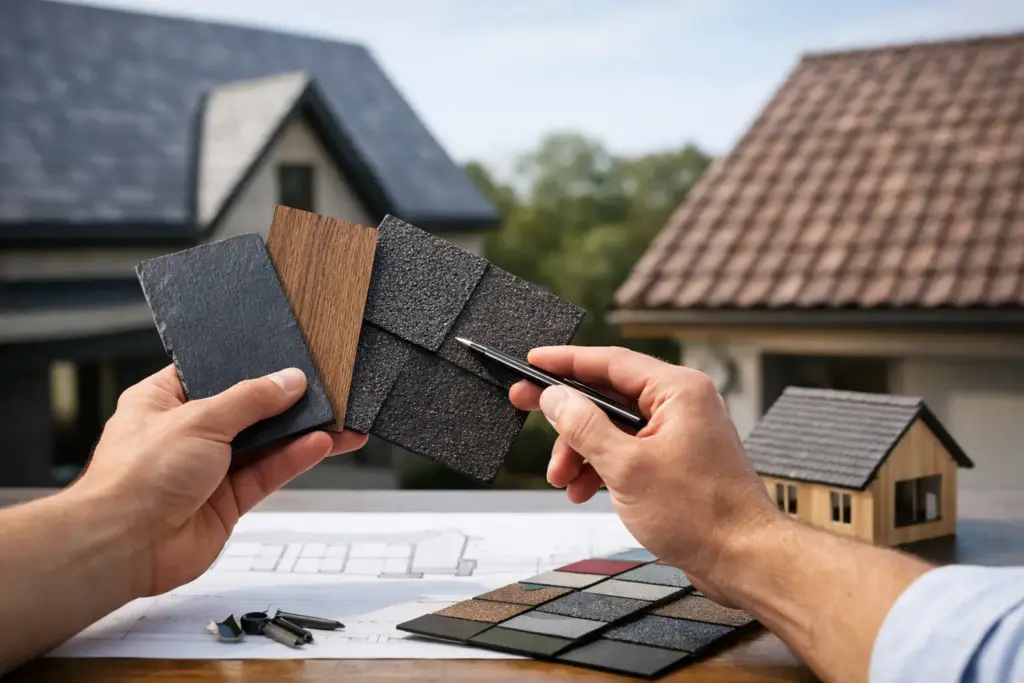
A premium roof can look impressive on day one and still be the wrong system for the house. In Alberta, that mistake gets expensive fast. If you are deciding how to choose premium roofing, the real question is not which product sounds high-end. It is which system will keep performing through snow load, wind exposure, freeze-thaw cycles, and decades of ownership without becoming a maintenance problem.
That is why premium roofing should be judged as a building system, not a surface finish. Material matters, but profile, fastening method, ventilation, underlayment, trim detailing, and installation discipline matter just as much. For acreage homes, custom builds, and higher-value properties, the right choice protects both the structure and the architectural standard of the home.
How to choose premium roofing for Alberta conditions
Start with climate, not colour. Alberta is hard on roofs. Heavy snow, strong winds, hail exposure in many regions, and extreme temperature swings all put pressure on the weakest part of any roofing assembly. A product that performs well in a mild climate may not hold up the same way here.
This is where premium metal roofing stands apart, but even within metal, not all systems are equal. A true premium system should manage water cleanly, resist wind uplift, handle thermal movement properly, and maintain structural integrity over time. If a roof looks refined but relies on shortcuts in fastening, flashing, or substrate preparation, it will not deliver premium performance.
For that reason, the first filter is simple. Ask whether the roof is engineered for demanding weather, or simply marketed as a better-looking upgrade. Those are not the same thing.
Define what “premium” should mean for your property
Homeowners and builders often use the word premium to describe appearance, price point, or brand reputation. In practice, premium roofing should mean three things at once: longer service life, higher installation precision, and a finished look that fits the architecture.
If you are building or upgrading a custom home, appearance matters. Clean lines, consistent detailing, and a roof profile that matches the massing of the home all affect curb appeal and long-term value. But appearance alone is not enough. A premium system should also reduce the risk of recurring repairs, premature aging, and seasonal failures.
That is especially relevant for rural and acreage properties where roof access, maintenance, and emergency repair work can be less convenient and more costly. Paying more upfront makes sense only when the system is built to perform for the long term.
Material choice comes first, but system design decides the result
When people research how to choose premium roofing, they often compare materials in isolation. Asphalt, metal, cedar, synthetic products, and composites all have different strengths. For Alberta’s climate and for higher-value homes, premium metal roofing is often the strongest long-term fit because it offers durability, fire resistance, low maintenance, and strong architectural control.
But the type of metal system matters. Standing seam metal roofing is often chosen for its clean appearance and concealed fastening, which helps protect against weather exposure and gives the roof a more disciplined finished look. European-style metal tiles and metal shingles can also be strong premium options when the project calls for more texture or a traditional form without sacrificing lifespan.
The right profile depends on the home. A modern custom build may suit standing seam. A large estate home or a more traditional design may benefit from a tile or shingle profile that brings more visual structure. The key is to choose a system that works with the architecture rather than fighting it.
Installation quality is not a detail – it is the product
A premium roof is only premium if it is installed to that standard. This is where many projects go off course. Owners compare material samples, colours, and warranties, but spend too little time evaluating how the system will actually be built.
Metal roofing requires precision. Panel alignment, flashing transitions, penetrations, edge details, snow management, ventilation planning, and fastening methods all affect performance. Small installation errors can lead to oil canning concerns, water intrusion, movement issues, and visual inconsistency. None of those are acceptable on a premium project.
Ask direct questions. Who is installing the system? Is the crew experienced specifically with premium metal roofing, or primarily with conventional roofing products? Are the trim details fabricated and planned properly for the house, or adjusted on site as problems appear? The answers matter because premium materials installed carelessly rarely outperform standard materials installed well.
Look beyond upfront cost
Premium roofing is a capital decision, not a short-term purchase. That means the cheapest quote is usually the least useful number in the room.
A lower initial price can hide thinner materials, exposed-fastener systems where a concealed-fastener system would be more appropriate, weaker detailing, or labour standards that do not match the expectations of a custom property. On paper, two quotes may both say metal roofing. In practice, they may represent very different levels of performance.
The better comparison is lifecycle cost. How long is the roof expected to last? What maintenance should be expected? How likely is it to need repair after severe weather? Will it still support the look and value of the property years from now? A well-selected premium roof often costs more upfront and less over ownership.
That is especially true for owners who plan to hold the property long term. Re-roofing once with a system designed for decades of performance is often the more disciplined financial move than replacing a lower-tier system twice.
How to assess fit by home type
Not every premium roof suits every project. A steep-slope custom home outside Calgary has different needs than an infill build in Edmonton or a rural investment property exposed to open wind.
Acreage homes often need roofing systems that can handle higher wind exposure, drifting snow, and broader roof planes where visual consistency matters. Custom homes usually demand cleaner detailing and stronger architectural alignment. Investment-focused owners may prioritize low maintenance, predictable durability, and resale confidence.
This is where specialist guidance matters. The best roofing choice is rarely based on one feature alone. It is a balance of slope, exposure, design intent, access, surrounding landscape, and ownership timeline. A serious contractor should be able to explain why one premium system fits the property better than another, rather than pushing a single option for every job.
What to ask before you commit
A proper consultation should leave you with more clarity, not more sales language. If you are comparing premium roofing options, ask about expected lifespan in Alberta conditions, the fastening and flashing approach, how thermal movement is managed, what underlayment is being used, and how snow retention is handled where needed.
You should also ask what the finished roof will look like at the edges, valleys, penetrations, and transitions to wall cladding or facade materials. Premium roofing is judged in those details. Large flat samples and brochure photos do not show the workmanship that defines the real result.
If the project includes broader exterior work, it is worth considering how the roof integrates with facade lines, soffits, drainage, and the overall envelope. Hazinasky Roofing LTD. approaches this as a complete exterior decision, which is often the right mindset for higher-end projects where the roof should not feel isolated from the rest of the building design.
Red flags when choosing a premium roofing contractor
Be cautious when a contractor speaks mainly about product brand names but very little about assembly details. Be equally cautious when every house is prescribed the same profile, the same trim approach, or the same installation timeline regardless of complexity.
Another red flag is vague language around workmanship. Premium roofing should come with precise answers about process, preparation, and execution. If the explanation stays broad, the standard may be broad as well.
Finally, pay attention to whether the contractor understands the property type you own. Higher-value homes and acreage projects come with different expectations. The roofing partner should be comfortable working at that level, both technically and visually.
Choose for the next 30 years, not the next quote
The right roof should make the home stronger, quieter to own, and easier to trust through hard weather. It should also look appropriate to the property – not oversized, under-detailed, or styled for a brochure instead of the building itself.
If you are serious about how to choose premium roofing, think less about what seems impressive at first glance and more about what will still be performing after years of Alberta winters. Good roofing covers a house. Premium roofing protects the investment, supports the architecture, and earns its cost over time.
That is the standard worth building to.