
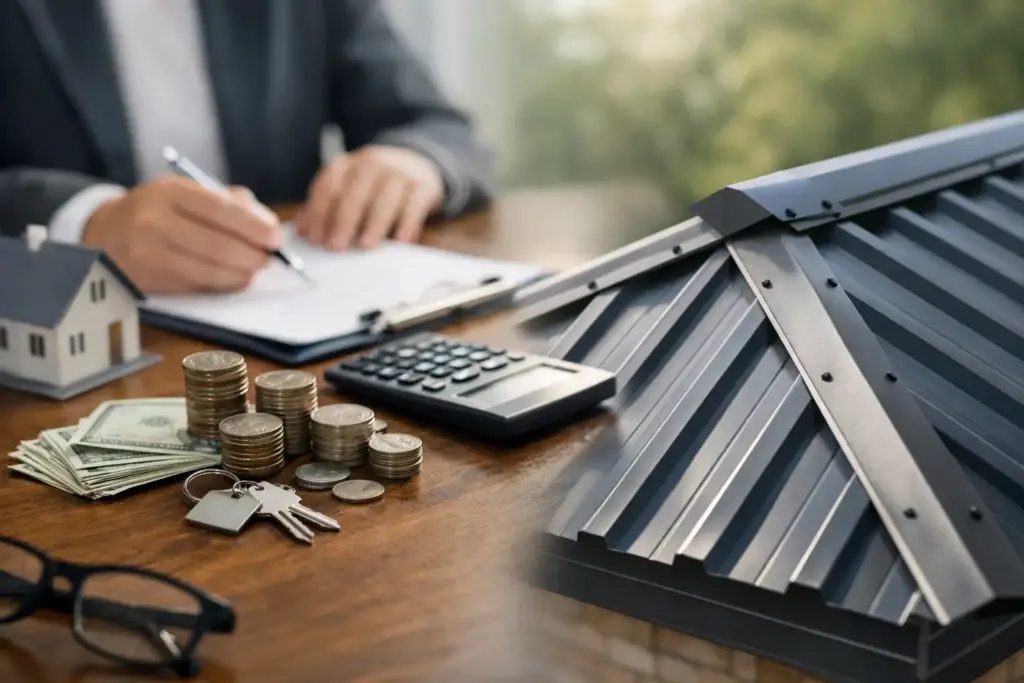
A metal roof is not a minor repair line on a household budget. On an acreage home, custom build, or investment property, it is a capital decision that affects weather protection, maintenance exposure, curb appeal, and resale confidence. Knowing how to finance a metal roof starts with treating the project as a long-term building investment, not simply comparing the lowest monthly payment.
Alberta’s snow loads, wind events, hail risk, and severe temperature swings place real demands on a roof system. A properly specified and installed metal roof can deliver decades of performance, but the financing plan must leave room for the full scope of work. Cutting the budget by removing essential flashing, underlayment, ventilation corrections, or qualified installation can turn a premium material into a compromised system.
Start With a Complete Project Price
Before approaching a lender or drawing from savings, obtain a detailed project quote. A meaningful metal roofing quote should account for more than the visible panels or tiles. It should identify removal requirements, roof preparation, underlayment, flashings, penetrations, ventilation details, snow retention where required, trim, waste handling, and installation.
The right roofing system also depends on the home. Standing seam may suit a clean contemporary design and low-slope sections. European-style metal tiles or metal shingles may better complement a traditional or estate-style property. Complex valleys, skylights, chimneys, dormers, and changes in roof pitch affect labour and detailing. Financing based on an incomplete allowance often creates pressure to make poor decisions once work begins.
Ask for clarity on what is included, what conditions could change the price, and how the payment schedule works. A professional contractor should be able to explain the scope in plain terms. That information gives your lender a defined project cost and gives you a realistic borrowing target.
Build a Budget Around Lifecycle Cost
Metal roofing commonly carries a higher upfront cost than conventional asphalt shingles. That difference matters, but it is only one part of the financial picture. The more useful question is what the roof will cost over the period you expect to own the property.
A lower-cost roof may require replacement sooner and can bring recurring costs for repairs, disposal, labour, and disruption. A premium metal system is designed for a longer service life, provided the assembly and installation are done correctly. It can also reduce the likelihood of routine maintenance issues associated with aging shingle roofs.
For a property owner planning to stay in the home for many years, a longer-lived roof may justify financing more readily than a short-lifecycle replacement. For an investor, the calculation may include tenant disruption, asset presentation, operating predictability, and the value of avoiding another roof replacement during the holding period.
Do not assume every financial benefit is guaranteed. Insurance premiums, resale value, and energy performance vary by insurer, property, roof colour, insulation levels, and local market conditions. Confirm those details directly rather than building your financing decision around an expected discount.
Common Ways to Finance a Metal Roof
The best financing route depends on your equity, cash flow, credit profile, timeline, and overall property plans. In many cases, the lowest rate is not automatically the best option if it creates inflexible repayment terms or delays a necessary replacement.
Home Equity Line of Credit
A home equity line of credit, often called a HELOC, can be a practical option for homeowners with sufficient equity. It may offer a lower interest rate than unsecured borrowing and allows funds to be drawn as project payments become due.
The trade-off is that HELOC rates are commonly variable. Your payment obligations can rise if interest rates change, and the borrowing is secured against your home. It is a strong fit for owners with disciplined repayment plans and adequate room in their monthly budget.
Home Equity Loan or Mortgage Refinance
A home equity loan can provide a fixed amount for a defined project. Some owners also consider refinancing their mortgage to incorporate a major exterior upgrade, particularly when broader renovation work is already planned.
This approach may make sense when the roof is part of a larger capital project, such as new siding, façade work, windows, or an addition. However, refinancing can involve appraisal requirements, legal costs, lender fees, and changes to the interest rate on your existing mortgage. Compare the total cost, not just the advertised rate.
Unsecured Personal Loan
An unsecured personal loan can fund a roof project without using home equity as security. Approval and funding may be relatively straightforward for borrowers with strong credit, and fixed payments can make budgeting predictable.
Interest rates are often higher than secured lending. This option can still be appropriate when the project must move ahead quickly, the borrowing amount is moderate, or preserving available home equity is a priority. Review the term carefully. A payment that looks manageable over a long term can become expensive once interest is included.
Contractor-Facilitated Financing
Some roofing contractors work with financing providers that offer payment plans for qualified customers. This can simplify the process because financing is connected directly to the project amount and payment schedule.
Read the agreement closely. Promotional rates, deferred-payment offers, administrative fees, repayment periods, and penalties can materially affect the final cost. Contractor-facilitated financing should support a well-scoped project, not encourage you to approve work before you understand the system being installed.
Cash and Planned Savings
Paying from savings avoids interest and gives you the simplest transaction. It is often the strongest option when the roof replacement is planned well in advance and the reserve is available.
Still, do not drain all accessible cash to pay for a roof. Acreage properties and larger homes can produce other unexpected expenses, especially through winter. Keeping an emergency reserve may be more financially sound than paying the entire project cost upfront.
Match the Financing Term to the Roof Decision
A metal roof is a long-term asset, but that does not mean every owner should use the longest possible financing term. The right term should balance total borrowing cost against monthly cash flow and your expected ownership period.
If you intend to sell within a few years, consider whether the roof will improve marketability enough to support the investment. A premium roof can be a meaningful selling feature on a high-value property, but buyers do not always assign a dollar-for-dollar premium to upgrades. In that situation, a shorter repayment plan or use of available equity may be more appropriate than extending debt far beyond your anticipated sale date.
If the property is your long-term home, predictable fixed payments may be worth a modestly higher rate than a variable option. If you own rental or investment property, ensure the payment structure fits the property’s actual cash flow rather than relying on optimistic rent increases.
Protect the Scope That Protects the Home
The greatest financing mistake is borrowing enough for the visible roof but not enough for the work that makes it perform. Metal panels, tiles, and shingles rely on precise details at eaves, valleys, ridges, walls, chimneys, and roof penetrations. Underlayment selection, ventilation, fastening methods, and expansion allowances also matter.
When comparing proposals, avoid reducing the decision to cost per square foot. A lower quote may reflect a simpler product, but it may also omit necessary components or labour-intensive details. Ask each contractor to explain the roofing assembly, the installation method, and how the system is designed for Alberta conditions.
This is especially important after storm damage. Insurance may contribute when damage results from a covered event, such as hail or wind, but ordinary wear, age, and maintenance issues are generally treated differently. Do not commit to a financing plan based on assumed insurance proceeds before the claim is assessed and documented.
Make Payments Fit the Construction Schedule
A clear payment schedule protects both the property owner and the contractor. Deposits may be required to reserve materials, particularly for specialized metal profiles, colours, or custom components. Further payments should correspond to meaningful project stages, with final payment tied to completion of the agreed scope and final review.
Coordinate your lender in advance. Confirm how quickly funds can be accessed, whether the lender needs a quote or invoice, and whether there are withdrawal limits. Delayed funding can delay material ordering and scheduling, which matters when weather windows are limited.
For high-value properties, it is also wise to keep a contingency allowance. Hidden deck repairs, code-related corrections, or damage discovered after tear-off can require additional work. The contingency should be realistic, but it should not be used as a substitute for a thorough pre-project assessment.
Questions to Answer Before You Commit
Before signing a financing agreement, be able to answer four questions clearly: What is the complete installed price? What will the monthly payment and total borrowing cost be? Which parts of the roofing assembly are included? What happens if the project uncovers necessary repairs?
If any answer remains vague, pause. Good financing should make a premium roof achievable without forcing compromises that undermine its service life. Hazinasky Roofing LTD. approaches metal roofing as a complete exterior system because the performance of the finished roof depends on the details beneath and around the metal, not just the material you see from the street.
The right financial plan is one that lets you install the roof your property actually needs, keep adequate reserves in place, and move forward with confidence that the work is built for Alberta conditions. Install it once. Done right.