
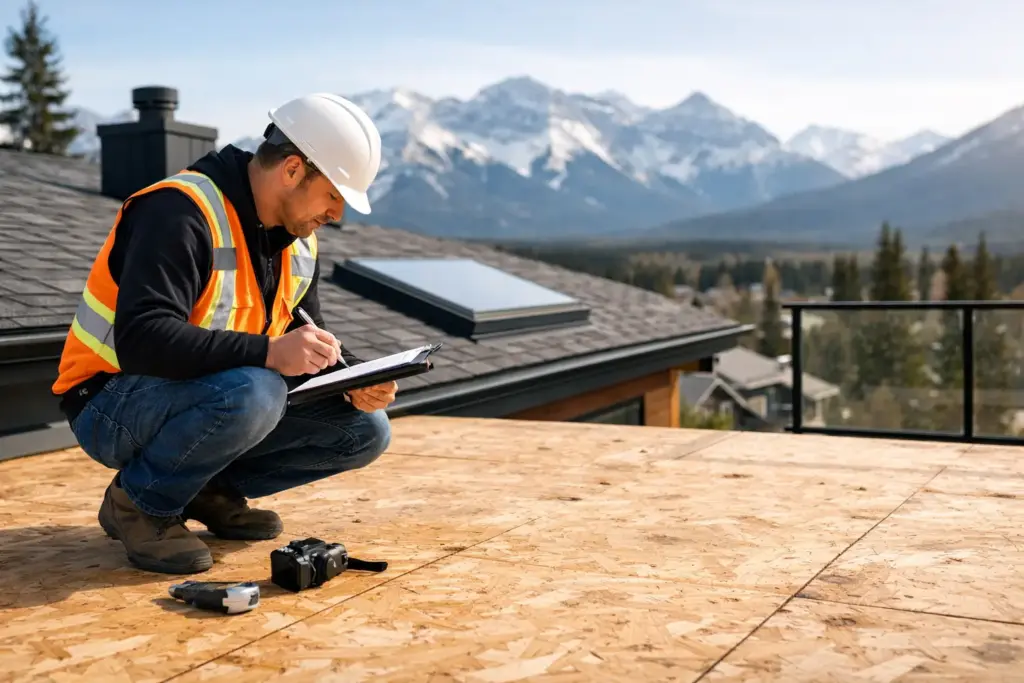
A premium roof system can look flawless from the ground while the structure beneath it is under stress. A roof deck inspection looks past visible panels, flashing, and trim to assess the substrate that supports the entire roofing assembly. For Alberta acreage homes, custom builds, and investment properties, this work helps prevent a concealed defect from becoming a structural repair, interior leak, or premature roof replacement.
The roof deck is not a cosmetic component. It is the foundation for correct fastening, clean roof lines, reliable weather protection, and long-term metal roofing performance. If it is wet, uneven, undersized, or poorly ventilated, even an excellent roofing material cannot perform as designed.
What a Roof Deck Inspection Actually Evaluates
A roof deck inspection evaluates the condition of the wood sheathing or structural deck below the roof covering. Depending on the roof system, access may come through the attic, from the exterior during removal of existing materials, or through carefully selected investigative openings. The right method depends on the home, the symptoms, and the scope of planned work.
The inspection is not limited to finding rot. A qualified assessment considers whether the deck is dry, flat, securely fastened, and capable of supporting the selected roofing system. It also reviews the surrounding conditions that affect it: insulation placement, attic ventilation, eaves, penetrations, valleys, and previous repair work.
For standing seam metal roofing and other premium metal systems, deck quality matters even more. Metal panels follow the surface below them. A deck with low spots, lifted edges, or uneven transitions can affect alignment and architectural finish. More seriously, moisture-damaged sheathing may not hold fasteners reliably under Alberta snow loads and wind exposure.
Why Alberta Roof Decks Need Closer Attention
Alberta roofs deal with a demanding combination of heavy snow, wind-driven rain, hail, freeze-thaw cycles, and sharp temperature changes. These conditions do not automatically damage a roof deck, but they expose weaknesses quickly.
Ice damming is a common example. When heat escapes into the attic, snow can melt higher on the roof and refreeze at the colder eaves. Water may back up beneath the roof covering and enter the deck. The first visible sign may be a ceiling stain, but the moisture issue can spread through sheathing, insulation, and framing before it becomes obvious indoors.
Wind is another concern, particularly on open acreage properties. Strong gusts test flashing, ridge details, and roof edges. If water enters at a vulnerable transition, it can remain trapped in the roof assembly. A small leak that dries poorly may gradually weaken the deck without producing dramatic exterior damage.
Older homes and homes with multiple additions deserve particular care. Changes in roof geometry, ventilation practices, insulation levels, and previous roofing materials can create inconsistent conditions across one roof. One slope may be dry and sound while another has repeated condensation or leakage around a valley, dormer, skylight, or chimney.
Warning Signs That Deserve Investigation
A roof deck cannot always be judged from a driveway. However, several signs should prompt a closer review. Ceiling staining, peeling paint near exterior walls, musty attic odours, frost in the attic, and recurring leaks after storms all point to a potential assembly issue.
From the exterior, sagging roof lines, rippled surfaces, lifted flashing, loose fasteners, or an uneven plane around valleys can also indicate trouble below the covering. With metal roofing, look for areas where panels appear to sit inconsistently or where trim details no longer lie cleanly against the roof surface.
These signs are not proof that the deck has failed. Condensation, plumbing leaks, ventilation deficiencies, or isolated flashing problems can produce similar symptoms. That is precisely why a proper inspection matters. Replacing visible materials without identifying the moisture source may simply hide the problem for a few more seasons.
The Key Conditions Inspectors Look For
Moisture Damage and Decay
Moisture is the primary threat to roof decking. Inspectors look for dark staining, soft wood, delamination, mould growth, swollen sheathing edges, and fastener corrosion. A moisture meter can help distinguish old staining from active or elevated moisture conditions, although readings must be interpreted in context.
The objective is not to replace every board with a mark on it. Sound material may remain in place if it is dry and structurally intact. The concern is wood that has lost strength, will not hold fasteners, or indicates an ongoing water-management problem.
Deck Flatness and Fastening
Premium metal roofing requires a disciplined substrate. The deck should provide a flat, stable surface so panels, underlayment, clips, and flashings can be installed to specification. Raised sheathing edges, loose panels, damaged areas around old penetrations, and excessive gaps can affect both appearance and performance.
Fastening also matters. In areas exposed to high wind or substantial snow movement, the roofing assembly depends on secure anchorage. If the deck is compromised, simply adding more fasteners is not a reliable solution. The affected material should be repaired so the system has a solid base.
Ventilation and Condensation Control
Not all deck damage begins with a roof leak. Warm, humid household air can enter an attic through unsealed openings around light fixtures, hatches, plumbing stacks, and framing transitions. When that air meets a cold roof deck in winter, condensation or frost can form.
Adequate ventilation helps manage moisture, but ventilation alone cannot correct major air leakage from the living space. A useful inspection identifies the full cause: air sealing, insulation, ventilation pathways, and exterior water protection all work together. Treating one piece in isolation can leave the deck vulnerable.
Penetrations and Transition Details
Most roof leaks occur at details, not in the middle of a roof field. Skylights, chimneys, plumbing vents, wall intersections, valleys, and low-slope transitions require careful inspection because they concentrate water and rely on precise flashing.
This is especially relevant when planning a metal roof upgrade. A premium system should include properly designed details around each penetration, not a panel installation that attempts to work around existing weak points. Correcting the deck and transition conditions before installation protects the investment from day one.
When to Schedule an Inspection
A roof deck inspection is most valuable before a roof replacement, after a known leak, following severe weather, or when purchasing a higher-value property with an uncertain roofing history. It is also sensible when an attic shows persistent frost, condensation, or mould, even if the exterior roof appears serviceable.
For a planned metal roof installation, the assessment should happen early enough to account for potential deck repairs in the project scope. This prevents surprises after old materials are removed and keeps the installation sequence controlled. A clear plan is better than discovering damaged sheathing halfway through a project and making rushed decisions.
Routine exterior roof reviews can identify visible risks, but a full deck evaluation is not necessary every year on every home. The timing depends on roof age, building design, prior issues, and exposure. A well-built, dry roof assembly may only need closer investigation when there is a specific concern or a major renovation planned.
What Property Owners Should Expect From the Process
A professional assessment should begin with the building, not a sales pitch. The inspector should ask about leak history, attic conditions, prior repairs, ice damming, and plans for the property. Exterior observations and attic access often reveal whether further investigation is warranted.
If existing roofing is being removed, the deck should be checked systematically as it is exposed. Damaged areas can then be documented and repaired before underlayment and metal roofing components are installed. This is the point where quality-focused contractors separate surface replacement from complete roofing work.
Homeowners should also expect straightforward recommendations. Some conditions need immediate repair. Others may only require ventilation improvements, air sealing, flashing correction, or monitoring. The right scope depends on evidence, not on automatically replacing more material than necessary.
Protect the Structure Before the Finish
A refined metal roof should deliver more than curb appeal. It should protect the home through decades of snow, wind, and seasonal change because the structure below it was properly assessed and prepared. Hazinasky Roofing LTD. approaches roof work with that standard in mind: correct the conditions that affect performance, then install the system with precision.
If your roof is approaching replacement, showing signs of moisture, or being considered for a premium metal upgrade, start with the deck. A sound, dry, properly prepared foundation gives the finished roof the best chance to perform exactly as intended.