
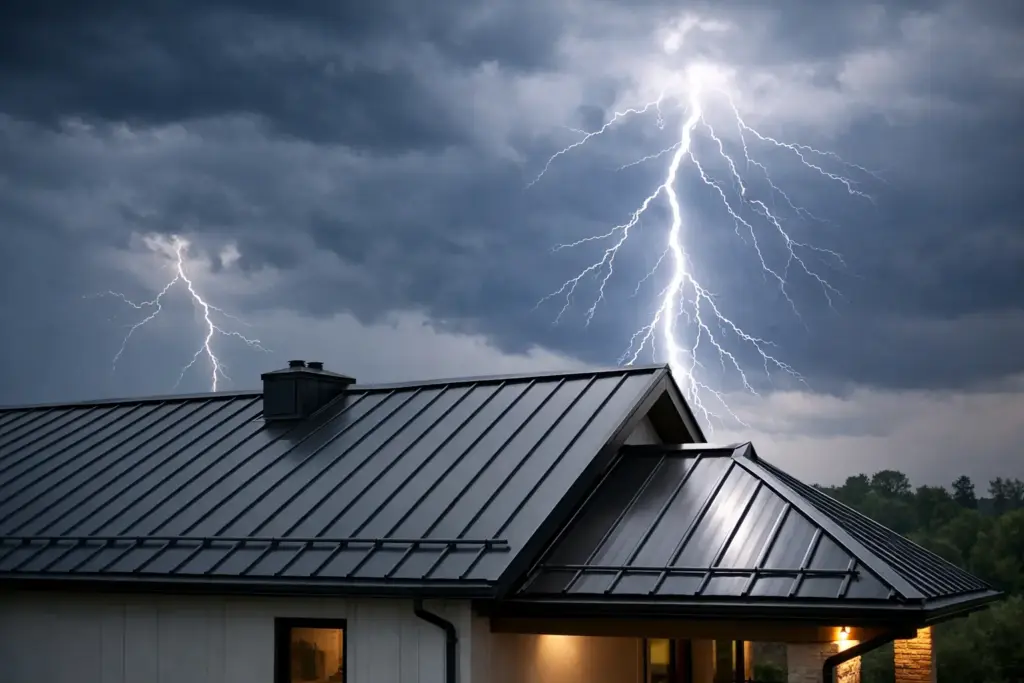
A metal roof can look like a natural target against an open Alberta sky, particularly on an acreage home surrounded by fields or tall trees. But do metal roofs attract lightning? No. Metal roofing does not increase the likelihood of a lightning strike. Lightning follows the path created by atmospheric conditions, height, location, and nearby objects – not the roofing material on the house.
That distinction matters when selecting a roof built for decades of snow, wind, temperature swings, and exposure. A properly specified metal roof offers meaningful performance advantages, but it should be understood clearly rather than treated as either a lightning hazard or a complete lightning-protection system.
Do Metal Roofs Attract Lightning More Than Other Roofs?
Lightning is drawn to the highest or most exposed conductive path available during a storm. A tall tree, chimney, antenna, cupola, ridge-mounted equipment, or home sitting on a rise may be more likely to be struck than a lower structure nearby. Whether the roof is metal, asphalt, cedar, or concrete does not determine where lightning lands.
Metal conducts electricity well, which is often confused with attracting electricity. Conductivity affects what happens after a strike reaches the material. It does not make the roof send an invitation to lightning.
For Alberta property owners, the practical question is less about roof material and more about site conditions. A custom home on an exposed ridge east of Calgary faces a different lightning profile than a home sheltered by established development in Edmonton. The height of the structure, surrounding topography, mature trees, utility equipment, and rooftop additions all deserve consideration.
What Happens If Lightning Strikes a Metal Roof?
A metal roof can conduct the electrical energy from a lightning strike across its surface. Because metal roofing is non-combustible, it is less likely to ignite from a direct strike than combustible materials such as wood shakes. This is a genuine safety benefit, although it does not mean a strike is harmless.
Lightning carries extreme energy. It can damage electrical systems, create side flashes to nearby conductive materials, damage rooftop components, and cause failures in equipment connected to the home. A strike can also travel through wiring, plumbing, cable lines, solar equipment, or other bonded metal components if the building is not properly protected.
The roof assembly itself also matters. Premium metal roofing is installed over a properly designed substrate and underlayment system, with precise flashing, trim, ventilation details, and fastening. These layers support weather performance and system durability. They are not a substitute for a purpose-designed lightning-protection system.
A standing seam roof, metal tile roof, or metal shingle roof should be assessed as part of the full building envelope. The right answer depends on the home, the site, and the equipment installed on or around the roof.
Grounding Is Not the Same as Lightning Protection
This is where many homeowners receive incomplete advice. A roof may be bonded or grounded as part of an electrical or building system, but standard grounding does not automatically provide full protection from a direct lightning strike.
A dedicated lightning-protection system is engineered to provide a controlled route for lightning energy. Depending on the property, it may include air terminals at critical high points, conductor cables, bonding of metal elements, grounding electrodes, and surge protection for electrical and communications systems. The design must account for the roof geometry, additions, chimneys, mechanical equipment, solar arrays, and the home’s existing electrical infrastructure.
Simply attaching a wire to a metal roof is not a professional solution. Poorly planned components can create performance issues, compromise roof details, or fail to protect the areas that matter. On a premium roof system, any penetration, clamp, or attachment must be selected and installed with the same discipline as the roofing itself.
If a property has elevated exposure, frequent lightning activity, expensive electronics, rooftop solar, or a high, isolated location, speak with a qualified lightning-protection specialist and licensed electrical professional. They can determine whether a dedicated system is appropriate and how it should integrate with the home without compromising the roof.
Why Metal Roofing Remains a Sound Choice in Alberta
Lightning is only one part of a roof’s risk profile, and it is rarely the deciding factor in a roofing investment. Alberta homes deal more consistently with wind uplift, snow loading, ice, hail, thermal movement, and repeated freeze-thaw cycles. A premium metal roof is selected because it is designed to manage those long-term demands.
Standing seam metal roofing offers clean architectural lines and concealed fasteners, reducing exposed points that can age under weather. European-style metal tiles and metal shingles can bring the same long-life material performance to homes where a more traditional profile suits the architecture. The correct system depends on roof pitch, home design, drainage patterns, exposure, and the owner’s expectations for appearance and maintenance.
Metal is also non-combustible, light relative to many roofing materials, and capable of shedding snow when the roof design and snow-retention strategy are properly planned. That last point needs care. Snow shedding can be an advantage, but uncontrolled snow release over walkways, doors, decks, or lower roofs is not. Roof layout, guards, flashing, ventilation, and drainage must work together.
The same principle applies to lightning concerns: good material is only one part of the result. The system, detailing, and installation standard determine whether the roof performs as intended.
Site Conditions That Deserve a Closer Look
Not every metal-roof project requires lightning protection. However, it is sensible to evaluate the issue during the design stage when a property has several exposure factors. This is particularly relevant for acreages, custom builds, and homes with substantial rooflines.
Consider a professional assessment when the home is unusually tall, sits on a hill or open plain, stands well above neighbouring structures, or includes antennas, weather stations, large chimneys, solar arrays, or rooftop mechanical equipment. Properties near frequent storm activity or with a history of nearby strikes should also be reviewed.
Trees need balanced consideration. Very tall trees close to a house can be more likely strike points, but they also create their own risk if branches or trunks fail during a storm. Removing every tree is not a lightning strategy. Managing hazardous trees and understanding the home’s relationship to the site is more useful.
For new construction, planning early is usually cleaner and more cost-effective than retrofitting later. It allows the roofing contractor, builder, electrician, and lightning-protection professional to coordinate their work before finishes and roof details are complete.
Protect the Whole Property, Not Just the Roof
A direct lightning strike is uncommon, but surge damage from nearby strikes can be costly. The electrical panel, appliances, security systems, irrigation controls, gate operators, garage equipment, internet hardware, and smart-home systems can all be vulnerable. Whole-home surge protection, properly installed by a licensed electrician, is often a practical discussion for high-value homes even where a dedicated lightning-protection system is not required.
During a roofing project, it is also worth reviewing anything attached to the roof. Satellite dishes, antennas, solar racking, heat-pump lines, vents, skylights, and snow guards must be planned around the roofing system. Adding components later without regard for metal panel layout or water management can create avoidable service issues.
At Hazinasky Roofing LTD., the focus is not simply placing metal panels on a structure. It is selecting and installing a complete exterior system that respects the home’s architecture, climate exposure, and long-term maintenance requirements.
A metal roof should give you confidence during Alberta weather, not another reason to worry. Choose the roof for its durability, fire resistance, design, and lifecycle value, then assess lightning protection based on the actual exposure of your property. Install it once. Done right.