
A roof that performs adequately on a sheltered city lot can fail early on an exposed Alberta acreage. Wind pressure, drifting snow, freeze-thaw cycles, hail, and intense summer sun place different demands on every layer of the assembly. Knowing how to compare roof systems means looking beyond the material sample and the initial quote. The right decision protects the structure, supports the architecture, and reduces the chance of paying for another replacement sooner than expected.
For higher-value homes and custom builds, roofing should be treated as a long-term building decision, not a finish selected at the end of construction. Material matters, but so do roof geometry, ventilation, drainage, fastening, flashing, and the installer’s ability to execute the system correctly.
Start With Alberta Conditions, Not Product Claims
Every roofing manufacturer can describe its product as durable. The more useful question is whether the complete roof system is suited to the conditions at your property.
An exposed rural site may see stronger wind uplift than a protected neighbourhood. A low-slope section can hold snow longer than a steep main roof. Valleys, dormers, skylights, chimney penetrations, and transitions between roof planes create concentrated water-management points. These details often determine performance more than the field area of the roof itself.
When comparing systems, ask how each option handles heavy snow, ice formation, driving rain, wind, hail exposure, and repeated expansion and contraction. Alberta temperature swings are not a minor consideration. Materials move, sealants age, and poorly detailed connections can become weak points over time.
A system should also suit the home’s roof pitch. Some materials are better suited to steeper slopes, while certain low-slope areas may require a different membrane or detailing approach. A credible proposal identifies these differences rather than applying one solution indiscriminately across every roof plane.
Compare Roof Systems by the Whole Assembly
A roof is not simply shingles or metal panels. It is an assembly of components designed to shed water, manage airflow, secure edges, and protect vulnerable transitions. Comparing materials without comparing these components leads to incomplete decisions.
Underlayment, ventilation, and drainage
Underlayment provides secondary protection beneath the exterior roofing material. Its specification should reflect the roof design, local weather exposure, and the level of protection needed around eaves, valleys, and penetrations. Ice and water protection is particularly relevant where snow accumulation and meltwater are common.
Ventilation deserves the same level of attention. A properly designed attic or roof ventilation strategy helps manage heat and moisture. It can reduce conditions that contribute to ice damming, condensation, and premature wear. Ventilation cannot correct every insulation or air-sealing issue inside a home, but it is an essential part of a well-performing roof assembly.
Drainage details should be clear before work begins. Ask how valleys, gutters, eaves, roof-to-wall intersections, and snow retention will be handled. On metal roofing, snow guards are often necessary where sliding snow could damage gutters, block entrances, or create hazards below.
Flashing and penetrations
Most leaks do not begin in the middle of a roof panel or shingle. They begin at transitions. Chimneys, vents, skylights, walls, valleys, and mechanical penetrations need purpose-built flashing and precise installation.
When reviewing a quote, look for clarity around these areas. Broad phrases such as “flash as required” do not tell you what system is being installed or how complex details will be resolved. Premium roofing work is defined by these intersections. Clean, durable flashing is both a weatherproofing requirement and an architectural one.
Evaluate Material by Lifecycle, Not Just Price
The lowest initial price can be reasonable for a short-term holding period or a simple, low-risk structure. It is rarely the only figure that matters for a primary residence, acreage home, or custom build intended to hold value over decades.
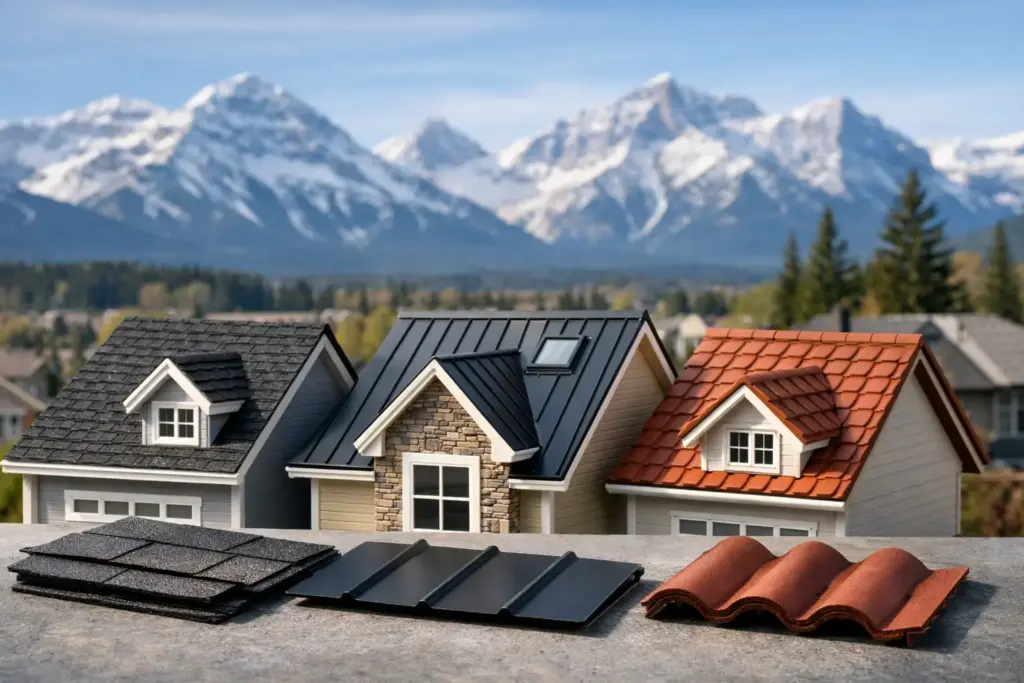
Asphalt shingles usually carry a lower upfront cost and remain common across Alberta. Their appearance has improved, and quality products can serve well when installed correctly. However, they generally have a shorter service life than premium metal systems and may require more frequent replacement over the life of the property.
Standing seam metal roofing offers a clean, architectural profile and concealed fastening in the field of the roof. It is often selected for custom homes because it provides strong weather performance, controlled thermal movement, and a refined finish. The trade-off is higher initial investment and the need for experienced installation. Panel layout, clip spacing, seams, trim, and flashing cannot be treated as routine work.
European-style metal tiles and metal shingles can offer a more traditional or textured appearance while retaining many of metal’s durability advantages. They may suit homes where a standing seam profile feels too contemporary. Their performance still depends on substrate preparation, fastening design, accessories, and proper detailing at hips, valleys, and edges.
A useful lifecycle comparison includes the purchase and installation cost, expected maintenance, repair risk, replacement timing, disposal, and the disruption of future reroofing. It should also consider whether the chosen roof supports the value and design standard of the property. A roof that looks appropriate and performs consistently can protect resale appeal as well as the building envelope.
How to Compare Roof Systems on Installation Quality
Two quotes can name the same material and still represent very different outcomes. Roofing systems are only as reliable as their installation.
Ask who will perform the work, whether the crew is experienced with the exact system proposed, and how quality control will be handled. Metal roofing is especially sensitive to measurement, panel planning, substrate condition, fastening, and trim fabrication. Small shortcuts can affect water management, wind resistance, appearance, and noise performance.
The proposal should define the scope clearly. It should identify removal or overlay work, deck inspection and repairs if required, underlayment, flashings, ventilation components, gutters or snow retention where applicable, site protection, and cleanup. It should also explain what happens if concealed deck damage or other conditions are discovered after the existing roof is removed.
Do not compare only the total at the bottom of the page. Compare what is included, what is excluded, and what assumptions have been made. A lower quote may omit the details that make a premium system function properly.
Consider Architecture and Exterior Integration
Roofing is one of the largest visible surfaces on a home. Its profile, finish, edge details, and relationship to siding, fascia, windows, and exterior cladding should be intentional.
Standing seam metal can reinforce a modern, disciplined architectural style. Metal tiles or shingles may better complement traditional, estate, or European-inspired homes. Colour selection matters as well. A dark roof can create strong visual contrast, while a lighter finish may suit a softer exterior palette. The best choice is not always the most fashionable one. It is the one that fits the home’s form and will continue to look appropriate years from now.
For new construction or major exterior renovations, consider the roof alongside wall cladding and facade elements. Coordinating roof trim, soffit, fascia, and materials such as fluted composite board creates a more complete exterior result. This is where a contractor focused on exterior systems, rather than basic replacement alone, adds practical value.
Ask About Maintenance and Ownership Responsibilities
No roof is maintenance-free. A premium system should reduce routine concerns, not eliminate the need for inspection.
Homeowners should plan to keep gutters and valleys clear, monitor sealants and flashings, and check for damage after severe hail or wind events. Trees should be managed so branches do not rub against the roof or allow excessive debris to collect. These are simple steps, but they protect drainage and help identify small issues before they become interior damage.
Metal systems typically require less recurring replacement work than many conventional options, but they still need proper access planning and care during any future service work. Trades working on solar equipment, antennas, vents, or mechanical systems must understand how to avoid damaging panels and flashings.
Use Warranties as a Check, Not the Decision
A long material warranty can be reassuring, but it should not be mistaken for a guarantee of complete roof performance. Manufacturer warranties often cover specific material defects under defined conditions. Workmanship coverage, installation requirements, exclusions, transferability, and maintenance obligations should all be reviewed separately.
The strongest protection is a correctly specified system installed to the manufacturer’s requirements and suited to the building. A warranty has value, but it cannot compensate for poor ventilation, inadequate flashing, unsuitable materials, or careless execution.
Make the Decision Around Your Property’s Time Horizon
If you expect to own the property for decades, are building a custom home, or want to avoid repeated reroofing cycles, lifecycle performance should carry significant weight. A premium metal system can be a disciplined investment when the roof design, budget, and installation standard support it.
If the home has a simple roof, a shorter ownership horizon, or a limited project budget, a well-installed conventional system may be the right choice. The goal is not to select the most expensive roof. It is to select the system that matches the exposure, architecture, ownership plan, and standard of the property.
For Alberta homeowners, builders, and property owners, the best roof comparison ends with detailed questions and a proposal built around the actual structure. Install it once, done right, begins with choosing a system that is designed for the conditions above your home.