
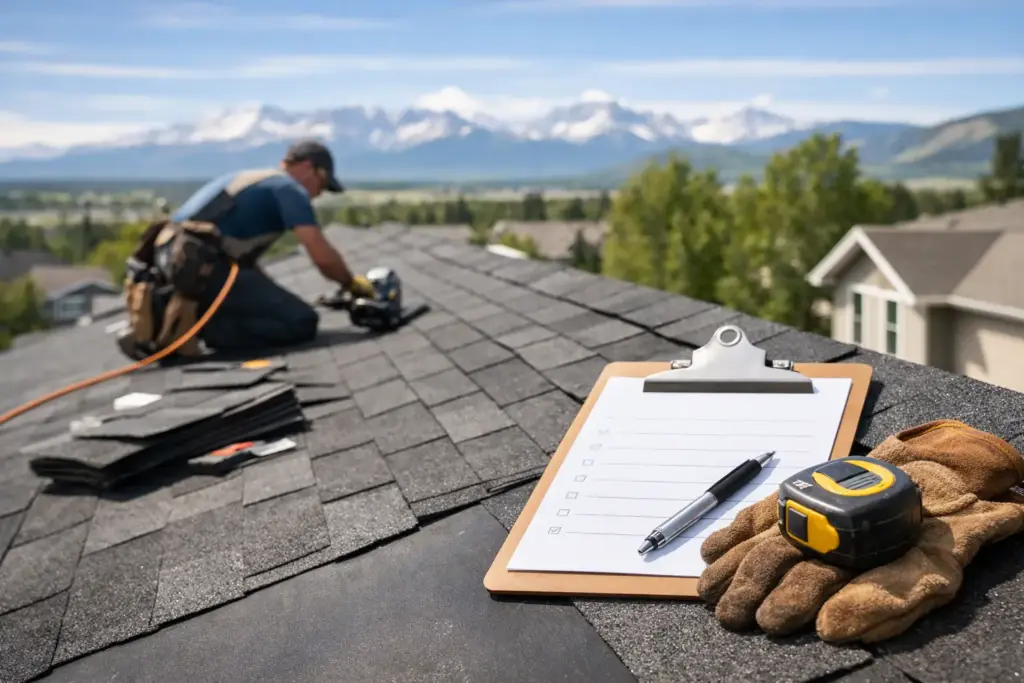
A roof can look acceptable from the driveway while the details beneath it are already failing. On Alberta homes, repeated freeze-thaw cycles, wind exposure, snow accumulation, and ice at the eaves can turn small installation shortcuts into expensive interior damage. This roof replacement checklist is built for property owners who want to assess the entire system before committing to a new roof – not simply select a colour and accept the lowest quote.
For acreage homes, custom builds, and higher-value residential properties, roof replacement is a capital decision. The right system should protect the building envelope, suit the architecture, and reduce the likelihood of doing the work again in 15 or 20 years.
Start With the Reason You Are Replacing the Roof
Be precise about what has changed. A roof nearing the end of its expected service life is one situation. Persistent leaks, wind damage, ice damming, poor attic ventilation, or repeated repairs point to a broader system issue. Replacing only the visible finish without correcting the cause can leave the property exposed.
Ask for a clear assessment of the roof deck, flashing, valleys, penetrations, attic condition, and drainage. If moisture has reached the sheathing or insulation, the scope should address those repairs before new roofing is installed. A premium roof covering cannot compensate for compromised structure or uncontrolled condensation below it.
Also consider the long view. If you are renovating the exterior, adding solar equipment later, or holding an investment property for decades, this is the time to choose a system that supports those plans. The lowest initial price is rarely the lowest ownership cost when replacement, repairs, disruption, and resale value are considered.
Roof Replacement Checklist: Confirm the Existing Conditions
Before comparing products, make sure the contractor has measured and documented the conditions that will affect performance. This work should happen on the roof and, where possible, inside the attic – not through an estimate based only on satellite imagery.
A thorough site review should confirm:
- Roof geometry, pitch changes, valleys, dormers, skylights, chimneys, and other details that affect water management.
- Deck condition, including soft areas, rot, delamination, and the extent of any sheathing replacement required.
- Eaves, soffits, insulation, and ventilation pathways that influence snow melt and condensation risk.
- Existing flashing, wall transitions, gutters, and drainage details that must integrate with the new system.
- Site exposure, including prevailing wind, open acreage conditions, drifting snow, mature trees, and access for materials and equipment.
These details determine the real scope of work. They also help explain why two quotes for what appears to be the same roof can differ substantially. A quote that excludes deck repairs, custom flashing, ventilation corrections, or proper edge details may look attractive until those requirements appear as change orders or future failures.
Select the Roofing System for Alberta Conditions
Material selection should begin with performance, then appearance. Asphalt shingles can be appropriate for certain budgets and project timelines, but they are a shorter-lifecycle product. For homeowners planning to retain a property long term, metal roofing deserves serious consideration because it resists wind, sheds snow effectively when designed correctly, and does not depend on granules or adhesive strips that degrade over time.
Standing seam metal roofing offers a clean architectural profile and concealed fastening, making it well suited to contemporary custom homes and exposed locations. European-style metal tiles and metal shingles can deliver the durability of steel while complementing more traditional, estate, or rural architectural styles. The right choice depends on roof pitch, design intent, surrounding exterior materials, and the level of visual texture the home requires.
Do not choose metal based only on gauge or colour. The coating system, panel profile, fastening method, trim design, underlayment, and installation standard all matter. A metal roof is a system of interlocking components. Poorly formed flashings or incorrectly located fasteners can undermine an otherwise premium material.
Snow retention is another project-specific decision. On steep roofs, metal can shed snow efficiently, which protects the roof surface but may create hazards over entrances, walkways, decks, mechanical equipment, or lower roof sections. A properly engineered snow retention plan directs that behaviour rather than reacting to it after the first winter.
Review What the Quote Actually Includes
A professional proposal should be detailed enough that you can understand how the roof will be built. Avoid comparing only the total price. Compare scope, materials, exclusions, and installation approach line by line.
Confirm whether the price includes removal and disposal of the existing roof, deck repairs, underlayment, ice and water protection where required, ventilation work, flashings, pipe boots, chimney details, valley construction, drip edges, and final cleanup. For metal roofing, ask whether trims are factory-matched or site-fabricated, how panels will be fastened, and how transitions will be sealed and finished.
Clarify whether work around skylights, masonry, siding, or fascia is included. These interfaces are common leak points, particularly on homes that have been renovated in stages. If another trade must complete part of the work, identify that responsibility before construction begins.
The warranty discussion should be equally clear. Material warranties and workmanship warranties are different protections. Read what each covers, how long it lasts, and what maintenance or registration requirements apply. A long product warranty has limited value if the installation details are not backed by accountable workmanship.
Verify the Contractor’s Installation Standards
A roofing system performs as well as it is installed. This is especially true with premium metal systems, where layout, panel handling, fastening, thermal movement, and precision flashing directly affect appearance and weather resistance.
Ask who will perform the work and whether the crew has specific experience with the proposed profile. A contractor who installs general roofing may not have the same process for standing seam panels, European metal tiles, or complex custom flashings. Request a clear explanation of how the roof will be protected during construction, how material will be stored, and how the crew will manage debris around landscaping, driveways, and finished exterior surfaces.
For custom homes and acreage properties, details deserve attention. Straight panel lines, balanced layouts at ridges and eaves, clean trim transitions, and properly integrated wall flashing are visible indicators of disciplined installation. More importantly, they are often where water control is won or lost.
Hazinasky Roofing LTD. approaches these projects as complete exterior systems, because a roof cannot be separated from the walls, eaves, drainage, and architectural lines around it.
Plan the Project Before Materials Arrive
Roof replacement affects more than the roof. Confirm the construction schedule, material lead time, access route, bin location, noise expectations, and weather contingency plan. Alberta weather can change quickly, so the contractor should explain how exposed areas will be protected if work is interrupted.
Inside the home, remove fragile wall hangings and protect attic belongings from dust. Outside, move vehicles, patio furniture, and equipment away from the work zone. If you have livestock, pets, tenants, or a business operating on the property, discuss access and safety requirements in advance.
If your municipality requires permits or if the property is subject to architectural controls, confirm approvals before ordering materials. This is particularly relevant for planned communities, multi-unit properties, and projects involving structural modifications, significant exterior changes, or new ventilation openings.
Complete a Final Walk-Through
Do not treat final payment as the end of the process. Walk the property with the contractor once the roof is complete. Review the roof from the ground, inspect visible trims and flashings, confirm that gutters and downspouts are clear, and ensure debris has been removed from landscaping and driveway areas.
Ask for care guidance specific to your new roof. Metal roofing generally requires little maintenance, but annual visual checks remain sensible. Look for blocked gutters, tree debris, damaged snow guards, loose accessories, or changes around penetrations after severe weather. Never allow incompatible materials or unplanned penetrations to be added without considering how they affect the roof system and warranty.
A roof replacement should leave you with more than a new surface. It should give the property a properly detailed weather barrier, a cleaner exterior profile, and a clear maintenance path for the years ahead. Choose the system and installation team with that standard in mind, and the decision will continue to pay for itself long after the crew has left.